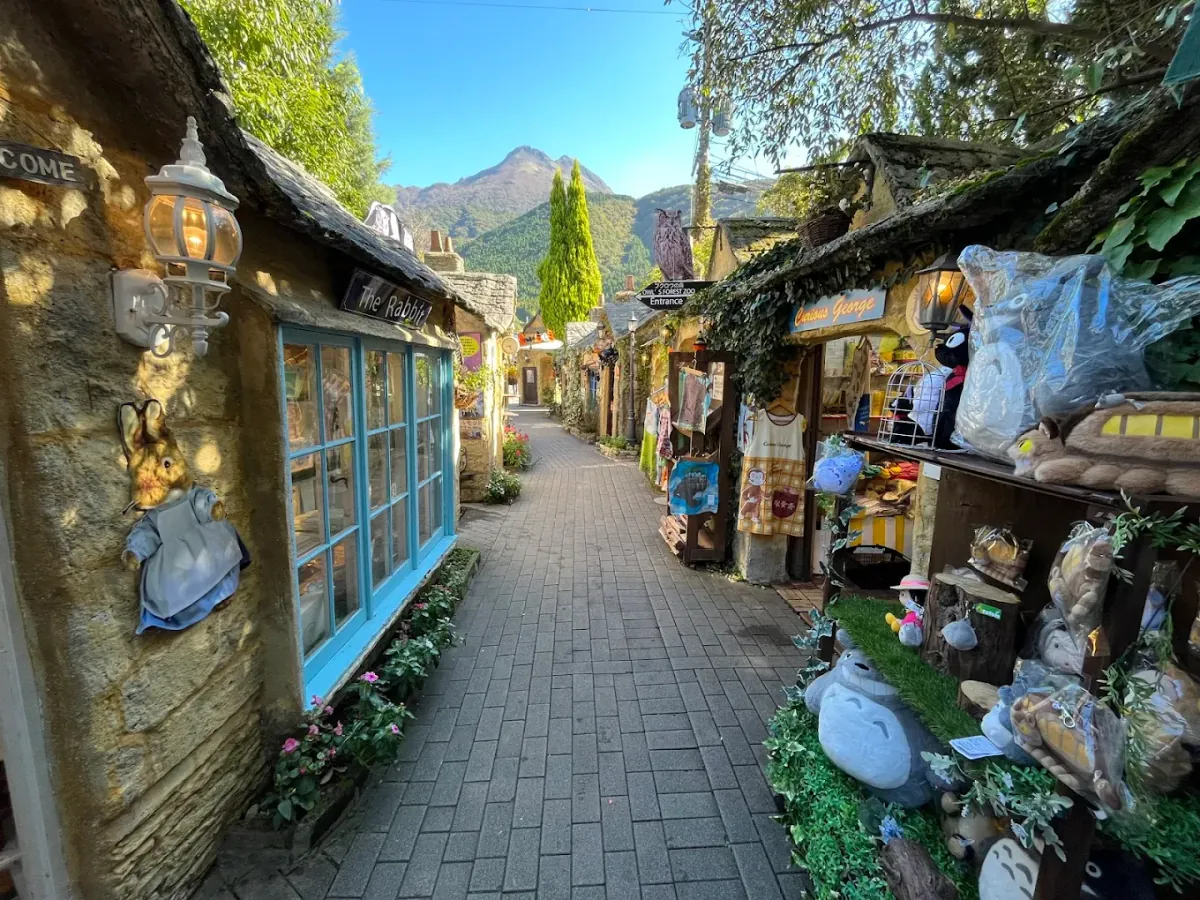
The morning mist still clings to Fukuoka's streets as I load my car, but I'm already imagining the steam rising from an outdoor bath, Mount Yufu's perfect cone reflected in still water. The drive to Yufuin Onsen isn't just about reaching a destination—it's about following an ancient rhythm, the same pull that has drawn travelers to these healing waters since the Nara period, over 1,200 years ago.
At barely 90 minutes from Fukuoka's urban sprawl, Yufuin feels worlds away. But the transformation doesn't happen all at once. It unfolds gradually as the road carries you east through Kyushu, from the fertile plains of Fukuoka into the mountain highlands of Oita, where every roadside station marks a shift in landscape, altitude, and culture.
I've made this drive a dozen times, and each journey reveals something new. Today, I'm taking my time, stopping at the roadside stations that turn a simple drive into a pilgrimage.
Fukuoka to Yufuin: The Onsen Road
A scenic 137-kilometer journey from Fukuoka through fertile plains and mountain passes to reach the tranquil hot springs of Yufuin Onsen
Crossing Into Oita: Where Plums Meet Mountains
The first hour passes quickly through Fukuoka's agricultural heartland—rice paddies giving way to orchards, urban sprawl fading into countryside. The real journey begins when you cross into Oita Prefecture and the landscape starts to rise.
About halfway to Yufuin, nestled in the hills of Hita City, I find my first stop.
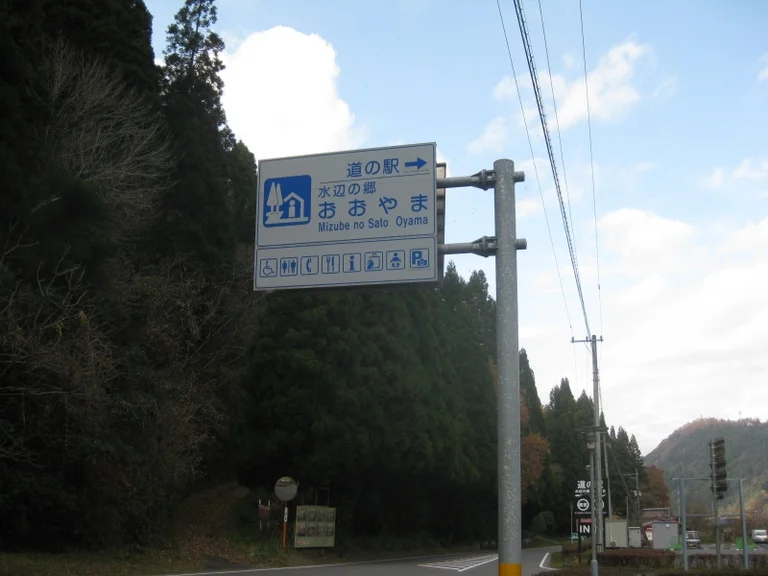
Mizube no Sato Oyama
4106 Nishi-Oyama, Oyama-machi, Hita, Oita Prefecture
Discover the Heart of Kyushu’s Fruit & Flavor Heritage
Mizube no Sato Oyama sits in one of Kyushu's premier plum-growing regions, and the station wears this heritage proudly. It's late autumn now, past plum season, but the station's market still overflows with plum wine and umeboshi (pickled plums) made from this year's harvest.
I'm not here for plums, though—not primarily. I'm here for what might be the most unexpected find on any roadside station in Japan: GELATERIA LAB3680 OKUHITA, where renowned chef Salvatore Cuomo transforms "imperfect" local fruits into artisanal gelato.
The concept is brilliantly simple: farmers bring fruits that are too large, too small, or irregularly shaped to sell commercially. Instead of wasting them, the station's gelato lab turns them into premium desserts—oversized melons, wild strawberries, misshapen pears—each batch unique to the season's harvest.
I arrive at 10:30 AM, just as they're preparing the first batch. The woman behind the counter explains their process: "We never use artificial flavoring. Just fruit, milk, and time." Today's special is strawberry-pear swirl—tart and creamy, with an intensity that can only come from fruit picked at peak ripeness, even if it didn't fit the grocery store mold.
Sitting on the outdoor terrace, gelato in hand, I can see the hills rolling away toward higher mountains. The air is cooler here than it was in Fukuoka. I'm gaining elevation, entering a different climate zone. The change is subtle but unmistakable.
Inside, I browse the Attack on Titan in Hita Museum—an unexpected pop culture detour that draws manga fans from across Japan. The juxtaposition is very Japanese: ancient plum traditions and modern anime culture coexisting without tension, each adding dimension to the other.
Back on the road, I notice the shift immediately. Cedar forests crowd closer to the asphalt, and the road begins to curve more sharply, following the contours of valleys rather than cutting straight through flatland. I'm climbing now, truly climbing.
The Sacred Falls
Another 30 minutes east, the mountains proper begin. The road narrows, winding through gorges where rivers run clear and cold. I'm looking for a waterfall—one of Japan's Hundred Famous Waterfalls, in fact.
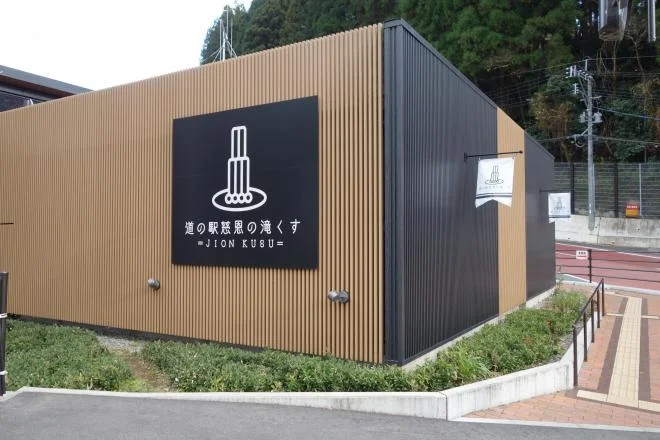
Jiin Falls Kusu
618-24 Yamaura, Kusu Town, Kusu District, Oita Prefecture
Discover Nature’s Serenity and Local Delights at Jiin Falls Kusu
Jiin Falls Kusu roadside station sits just a one-minute walk from Jiin Falls itself, and I can hear the water before I see it—a deep, continuous roar that speaks of power and permanence.
I park and walk the short path to the viewing platform. The falls cascade in two distinct tiers, water tumbling over volcanic rock in sheets of white spray. The Japanese name—慈恩の滝 (Jion no Taki)—translates roughly as "Falls of Compassion," and standing here in the mist, breathing air that tastes of minerals and forest, I understand why.
This water is considered sacred. The spring that feeds the falls has been revered for centuries, and the roadside station has built its entire identity around this purity.
Back at the station, I discover their signature product: "Man-nen Genki Tofu" (Thousand-Year Vitality Tofu), made from local soybeans and spring water flowing from the same source as the waterfall. The tofu is silky, almost custard-like, with a subtle sweetness that doesn't need soy sauce to shine.
I try their tofu soft serve—yes, tofu ice cream—and it's a revelation. Light, clean, faintly nutty, made with the same spring water that's been flowing over this rock for millennia. It's the kind of regional specialty you can't replicate elsewhere, tied inexorably to this specific place, this specific water.
The woman behind the counter fills my water bottle from the spring tap without my asking. "Good for the drive," she says. "Keeps you alert." I thank her and take a long drink. The water is cold, clean, with a mineral brightness that makes tap water seem dull by comparison.
As I prepare to leave, I notice how much the temperature has dropped. I'm perhaps 20 kilometers from Yufuin now, but I'm higher in the mountains, deeper into onsen country. The air smells different—sulfur mixing with pine, that distinctive mineral scent that signals volcanic activity beneath the earth.
The anticipation builds.
Arrival: Where Mountain and Mist Converge
The first sign of Yufuin isn't visual—it's olfactory. The faint, mineral scent of sulfur drifts through the car vents, subtle but unmistakable. Then Mount Yufu appears, rising ahead like a perfectly symmetrical promise. The locals call it "Bungo Fuji" for its resemblance to Japan's most famous peak, and from this angle, the comparison seems perfectly apt.
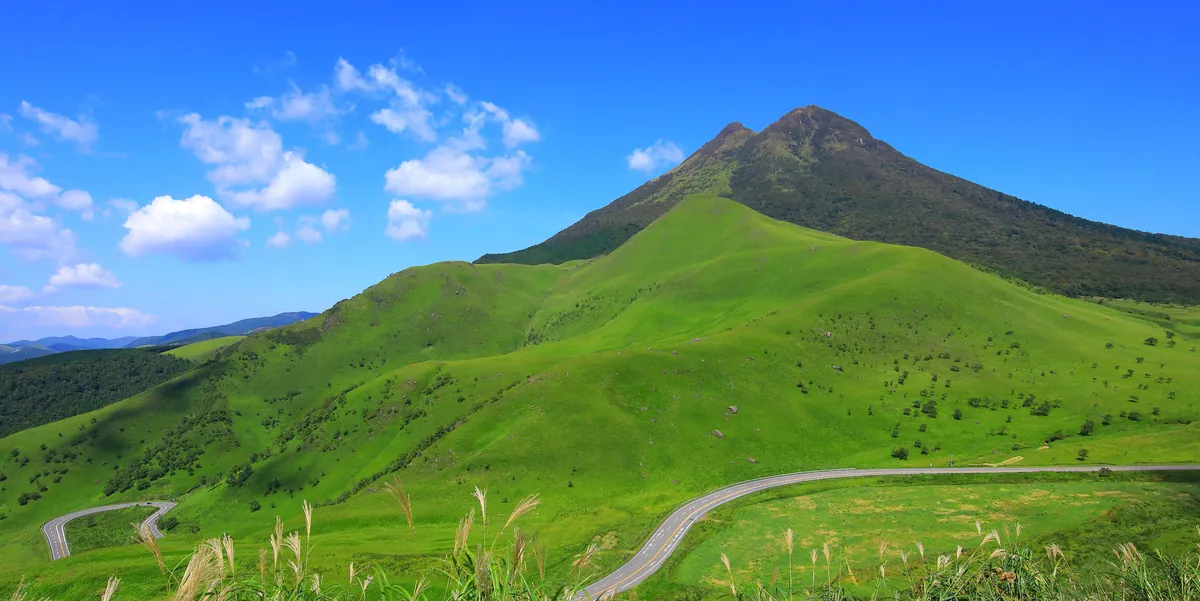
Mount Yufu rising above Yufuin's pastoral landscape
Before entering town, I make one final stop at the gateway to Yufuin—the roadside station that serves as an information hub and cultural introduction to everything that awaits.
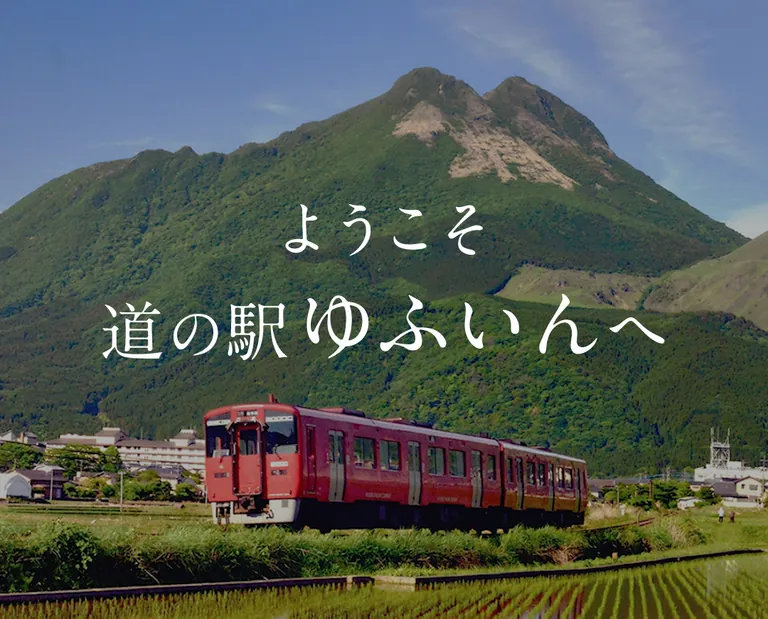
Yufuin
899-76 Kawakita, Yufuin-cho, Yufu-shi, Oita-ken
Discover the Gateway to Yufuin’s Natural and Cultural Treasures
Yufuin roadside station sits right at the Yufuin Interchange, offering panoramic views of Mount Yufu from its observation deck. I climb the stairs and the vista stops me—the mountain dominates the skyline, its slopes covered in autumn colors, steam rising from countless onsen scattered across the valley below.
Inside, the market hall buzzes with mid-afternoon activity. I browse local crafts—handmade pottery, yuzu-scented soaps, bamboo baskets—but what draws me is the restaurant Gakuan, where they serve Yufuin Onsen Soba: noodles made with buckwheat grown in these highlands and, remarkably, cooked in hot spring water drawn from beneath the building.
The waitress explains as she sets down my bowl: "The minerals in the onsen water give the noodles a different texture. Silkier. It's subtle, but regular customers always notice."
She's right. The noodles slip through the broth with unusual smoothness, and there's a faint mineral note underlying the traditional dashi flavor—nothing overpowering, just a whisper of the volcanic forces that make this valley what it is.
I buy a walking map from the information center—detailed, hand-drawn, marking not just the tourist spots but the hidden paths locals use, the best angles for photographing Mount Yufu, the quietest sections of Lake Kinrin's shore. "Start at the lake," the woman behind the counter advises. "Arrive before sunset. The light is different then."
I thank her and drive the final few kilometers into Yufuin town proper. The roadside station has done its job—oriented me, fed me, prepared me for what's ahead.
Yufuin is not Beppu, not one of those hot spring cities that shouts its presence with neon and noise. This is onsen culture refined to its essence—quiet ryokan tucked behind bamboo fences, steam rising from private baths, the mountain watching over everything with benevolent permanence.
I check into my ryokan just after 2 PM, and the proprietress greets me with the practiced grace of someone who has welcomed thousands of weary travelers. "The bath is ready whenever you wish," she tells me, then adds with a knowing smile, "but perhaps walk first. Let the town settle into you."
So I walk.
The Art of the Soak
Yunotsubo Street is Yufuin's commercial heart, but even here, the atmosphere remains unhurried. Galleries showcasing local art alternate with cafes serving handmade sweets. I duck into a small shop selling yuzu-scented bath salts and handcrafted pottery, the kind of simple, beautiful objects that seem to emerge naturally from places with this much creative energy.
The town hosts film festivals, music events, food fairs—Yufuin has cultivated a reputation as an arts-friendly destination, where culture and nature coexist without friction. But today, I'm here for something more primal: the water.
Back at the ryokan, I finally surrender to what I came for. The private outdoor bath—rotenburo in Japanese—is surrounded by a bamboo screen that provides privacy while still allowing views of the garden and, beyond it, Mount Yufu's commanding silhouette.
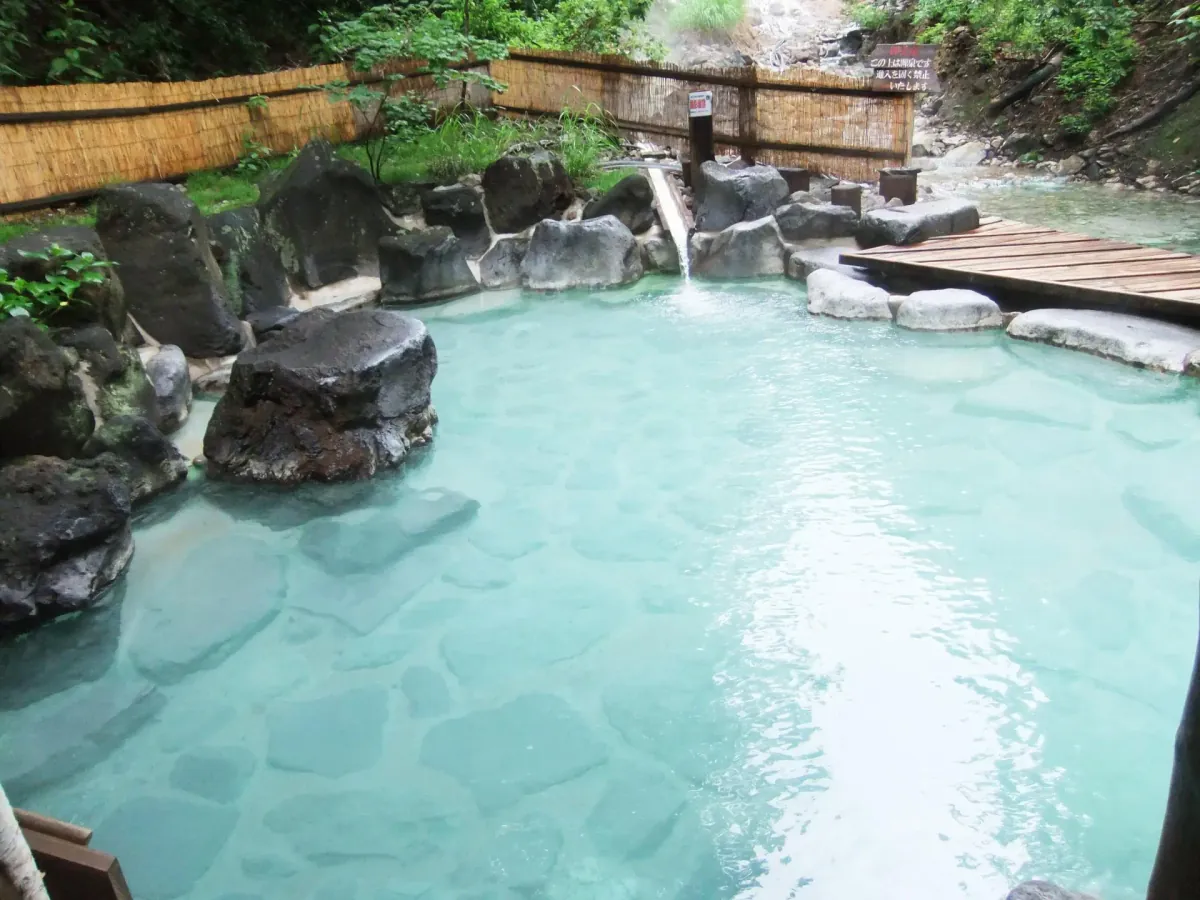
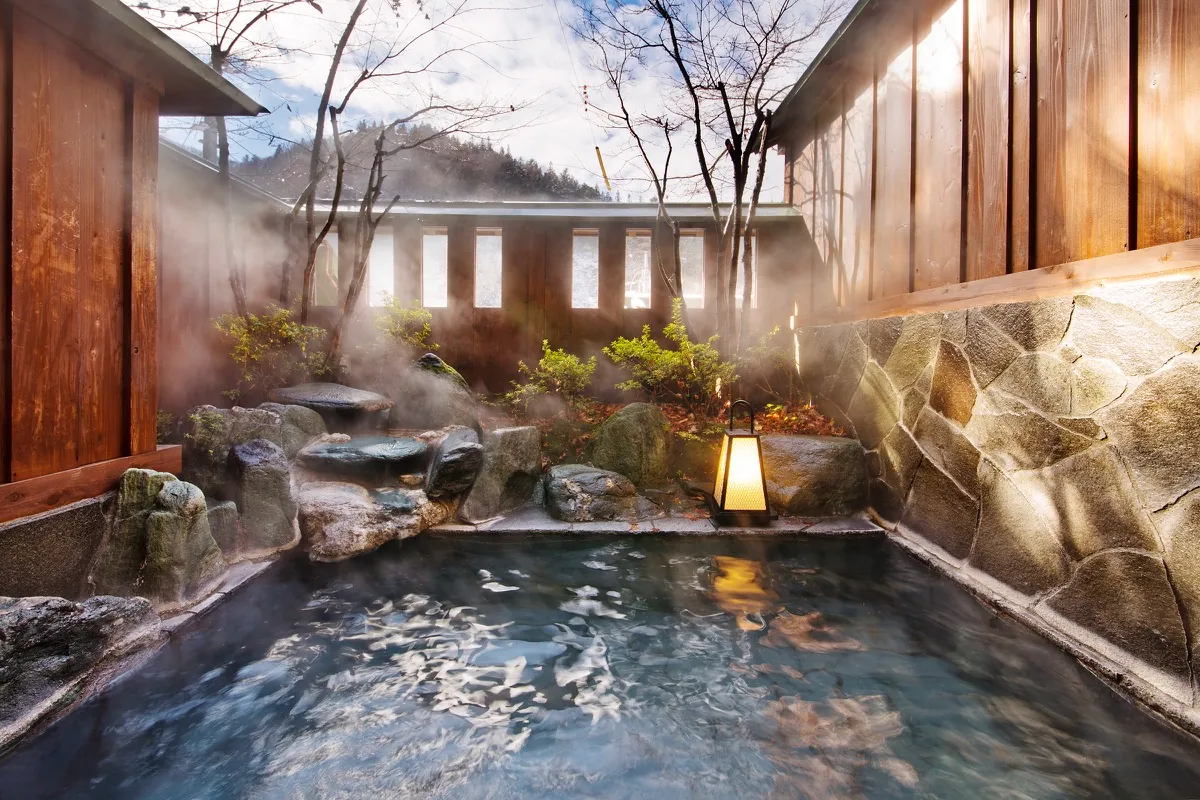
Traditional outdoor rotenburo bath with mountain views
The water is classified as "simple hot spring"—colorless, transparent, nearly odorless, gentle on the skin. It's the kind of water you can soak in for extended periods without feeling overwhelmed. The temperature hovers around 42°C (107°F), hot enough to make your skin prickle, not so hot that you can't submerge completely.
I step in slowly, letting my body adjust degree by degree. The initial shock gives way to profound relaxation as the mineral-rich water envelops me. This is Yufuin's second-largest hot spring output in all of Japan at work, drawn from deep aquifers heated by the same volcanic forces that shaped Mount Yufu itself.
The therapeutic effects are immediate—tension I didn't know I was carrying dissolves from my shoulders, my neck, my lower back. The water is said to help with neuralgia, muscle pain, and fatigue recovery, but what I feel goes beyond mere physical relief. It's a mental unwinding, a slowing down of the constant internal chatter that modern life demands.
I lose track of time. Steam rises from the water's surface, creating ephemeral patterns in the cooling evening air. A bird calls from somewhere in the garden. Mount Yufu darkens as the sun drops behind the mountain's western slope.
This, I think, is why people have been coming here for over a millennium. Not just for the heat, not just for the minerals. But for this: the permission to simply be, held by water, held by mountains, held by a landscape that has been offering this particular form of healing since before Japan had a written history.
Morning Rituals
I wake before dawn the next morning, pulled from sleep by a knowing I can't quite name. I dress quickly and walk through the sleeping town toward Lake Kinrin.
The lake is famous for its morning mist, and today it doesn't disappoint. As the sun rises, steam lifts from the water's surface in ethereal sheets, backlit by the strengthening light. The effect is otherworldly—part dream, part reality, wholly unforgettable.
Hot springs feed into the lake from below, keeping the water temperature slightly warmer than the surrounding air. This temperature differential creates the mist, a natural phenomenon that transforms the lake into something almost mystical each dawn.
I'm not alone. A handful of early risers stand along the shore, cameras ready, but we maintain a respectful silence. Some experiences demand quiet. The mist swirls and shifts, revealing and concealing the far shore, Mount Yufu beyond it emerging from shadow into definition as the day brightens.
An elderly man in a dark coat nods at me. "First time?" he asks. I shake my head. "But it's different every visit," I reply. He smiles, pleased. "Exactly so," he says, then turns back to the lake, content.
I stay until the mist begins to burn off, until the lake settles into its daytime character—still beautiful, but no longer magic. Then I walk back through streets beginning to wake, past shops opening their shutters, past the steam still rising from a thousand private baths.
The Return
The drive back to Fukuoka feels different, as it always does after time in Yufuin. I'm looser, slower, more present. The onsen effect lingers in my muscles, in my mind, in the way I notice things I might otherwise miss—the light on rice paddies, the curve of a mountain road, the simple perfection of a persimmon heavy on its branch.
I stop again at Ukiha for lunch, unable to resist one more taste of that cold-pressed juice. I stop at Harazuru to buy persimmon chips for friends. I stop at Kurume to pick up fresh vegetables for the week ahead.
Each roadside station represents a facet of this region's richness—agriculture, tradition, craft, community. Together, they form a journey as nourishing as the destination itself.
By the time I reach Fukuoka, the city's energy feels manageable rather than overwhelming. I'm carrying Yufuin's calm with me, stored in my cells along with the minerals from that perfect water.
The Japanese have a concept—湯治 (toji)—which refers to extended hot spring therapy, traditionally a week or more spent soaking daily in healing waters. Most of us can't manage that anymore, can't carve out that much time from modern life's demands.
But we can do this: ninety minutes on good roads, three roadside stations showcasing the best of local culture, and a night or two surrendered to water and mountain and mist. We can let the journey become part of the healing, stopping to taste persimmons and talk to farmers, collecting stamps and stories along with the miles.
We can remember that renewal sometimes lives just down the road, waiting in steam and silence, accessible to anyone willing to drive toward it.
The road to Yufuin isn't just a route on a map. It's a reminder that healing spaces still exist, that you can still find places where time moves differently, where water rising from the earth carries something essential we've forgotten we need.
All you have to do is point your car east from Fukuoka and follow the road where it leads—through plains and orchards, over mountain passes, toward steam and mountain and the promise of water that remembers what it means to restore.
Featured Stations: In-Depth Highlights
Of the 3 stations on this route, we've highlighted 3 exceptional stops that truly embody the region's unique character. Each offers unique experiences worth making time for.
Mizube no Sato Oyama
4106 Nishi-Oyama, Oyama-machi, Hita, Oita Prefecture
Discover the Heart of Kyushu’s Fruit & Flavor Heritage
Jiin Falls Kusu
618-24 Yamaura, Kusu Town, Kusu District, Oita Prefecture
Discover Nature’s Serenity and Local Delights at Jiin Falls Kusu
Yufuin
899-76 Kawakita, Yufuin-cho, Yufu-shi, Oita-ken
Discover the Gateway to Yufuin’s Natural and Cultural Treasures
Jessica Muller
European travel writer based in Japan for the past four years. Explores rural communities and regional culture across the country, bringing authentic stories of local life to Western readers.