
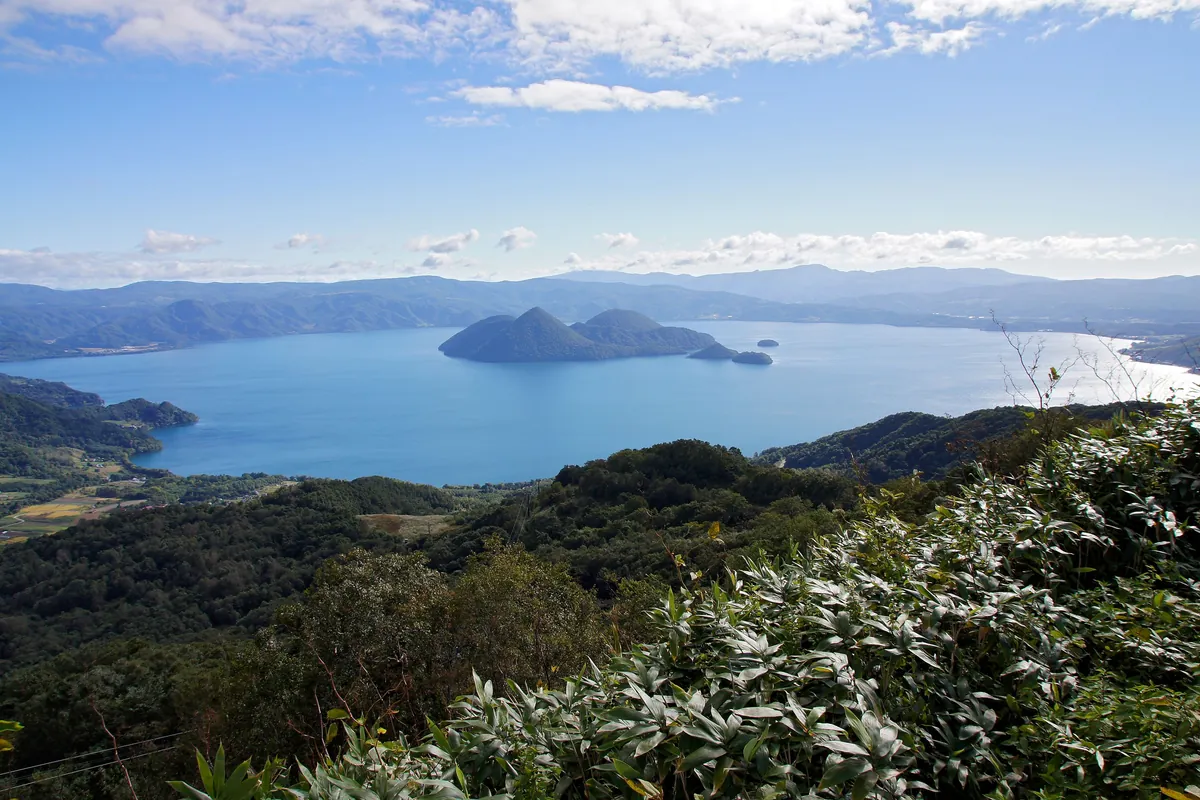
There's a route through southwestern Hokkaido that traces the story of the earth itself—a journey where mountains born from fire meet serene lakes cradled in ancient calderas, where coastal vistas stretch toward the horizon, and where every roadside station tells a chapter in the region's natural and cultural history.
This is the Shikotsu-Tōya UNESCO Global Geopark, a landscape shaped by volcanic forces over millennia. What makes this journey particularly compelling? It's entirely achievable in a day or two, yet rich enough to warrant a week of exploration. You'll taste the difference terroir makes when volcanic soil meets Hokkaido's clean air and pure water, and you'll see how communities have turned geological challenges into cultural assets.
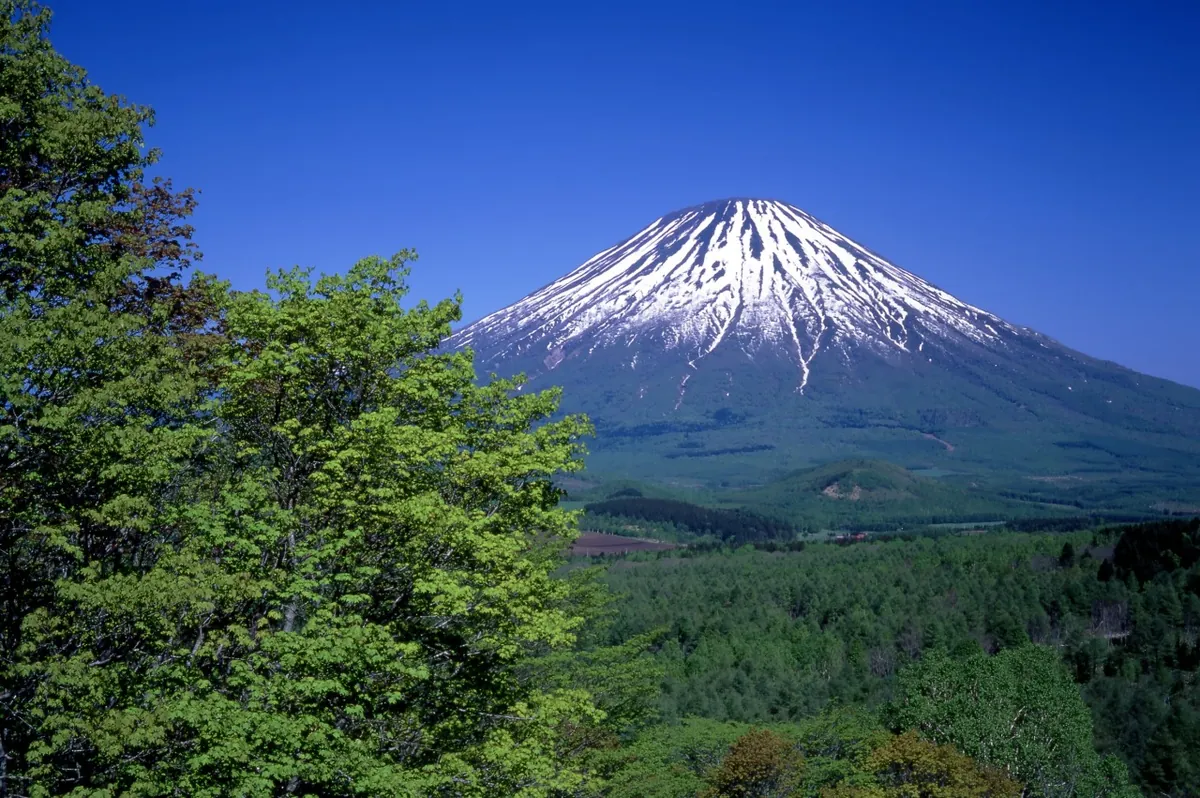
Spring in Niseko brings vibrant green valleys contrasting with Mount Yotei's snow-capped peak
The Volcanic Circle Route
A 120km journey through southwestern Hokkaido's volcanic heartland, from Mount Yotei's slopes through caldera lakes to the Pacific coast. Follow this route to experience how fire and ice shaped the land, communities, and cuisine of the Shikotsu-Tōya UNESCO Global Geopark.
Why This Route is Special
What makes the volcanic circle compelling isn't just the dramatic scenery—though standing before a caldera lake formed 110,000 years ago is undeniably moving. It's that the geology becomes tangible in unexpected ways.
You taste it in vegetables grown in mineral-rich volcanic soil, their flavors more intense than anything from commercial farms. You see it in the heirloom apple varieties that thrive in Sobetsu's unique microclimate, producing jams and wines you won't find anywhere else. You understand it when you visit museums that explain volcanic life with clarity rather than fear, showing how communities have not just survived but flourished by understanding the forces beneath their feet.
The route also offers something increasingly rare: authentic farm-to-table experiences where "local" actually means the farmer's name is on the label and their field is visible from the roadside station. At Niseko, I watched morning harvests arrive while I ate breakfast. At Sobetsu, I learned about apple varieties from the grower's family member working the counter. This isn't a staged farm experience for tourists—it's the real infrastructure of how these communities feed themselves and share their bounty with visitors.
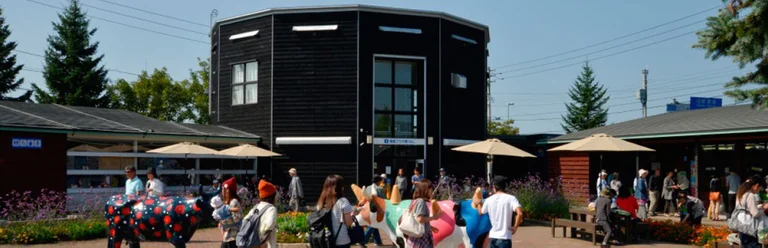
Niseko View Plaza
77-10 Motomachi, Niseko-cho, Abuta-gun (along National Route 5)
Discover the Heart of Niseko at Niseko View Plaza
What to Taste: The Volcanic Terroir
The volcanic soil creates flavors you won't find elsewhere. Here's what you absolutely must try:
Niseko's Morning Harvest:
The Agricultural Products Sales Counter at Niseko View Plaza showcases the volcanic advantage. Snow-under carrots that spent winter beneath insulating snow have their starches converted to sugar by the cold, creating an almost candy-like sweetness—bite into one raw and you'll understand why locals eat them like apples.
Spring asparagus cut at dawn and sold with the grower's name attached has an intensity of flavor that makes imported asparagus taste like paper. The difference is night and day: thick stalks snapping with freshness, sweet and grassy with none of the bitter aftertaste.
Don't miss the Niseko Dog from Efefu—a handmade sausage crafted from Hokkaido pork, free from preservatives, grilled to order. Simple, but the quality speaks volumes.
Sobetsu's Apple Heritage:
Sobetsu is apple country, with heirloom cultivars commercial orchards abandoned decades ago. The Sobetsu Apple Jam layers multiple apple varieties together, creating complexity you won't find in commercial brands—sweet, tart, floral notes all dancing together.
Even more rare: Sobetsu Apple Wine, a delicate, slightly effervescent drink made from 100% local apples. The volcanic soil gives it a distinctive minerality, a freshness that speaks of mountain air and pure water. Production is limited—"we use only apples from Sobetsu orchards," the vendor explains.
Muroran's Working-Class Excellence:
At Mitara Muroran, try the uzuran soft cream, made with eggs from locally raised quail. The richness is extraordinary—custardy, complex, nothing like standard soft serve.
For lunch, Muroran yakitori isn't chicken but pork belly and onions grilled on skewers with savory-sweet sauce. This is working-class food elevated by decades of refinement, each vendor perfecting their balance of fat and lean.
What Makes These Foods Special:
- Volcanic soil richness: Higher mineral content creates more intense flavors
- Microclimate advantage: Protected valleys and mountain influence
- Morning freshness: Many items hours from harvest to your plate
- Artisanal production: Small batches, traditional methods, family recipes
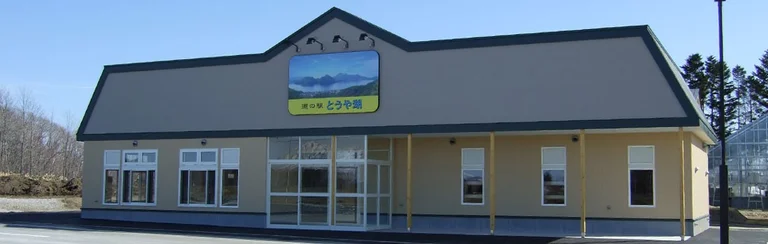
Toya Lake
9-4 Kagawa, Toyako-cho, Abuta-gun (along National Route 230)
Discover the Heart of Hokkaido’s Natural Beauty
The Five Stations: Your Complete Route
This journey works best as a north-to-south progression, following the volcanic drama from mountain peaks to coastal vistas.
Station 1: Niseko View Plaza (Start: Mountain Gateway)
Opens 9:00 AM—arrive by 9:30 AM to beat crowds and catch farmers delivering morning harvests. The view of Mount Yotei through floor-to-ceiling windows is worth the early start. The volcanic ash from Mount Yotei's past eruptions created exceptionally fertile soil here—Niseko potatoes are legendary across Hokkaido, and you'll taste why. Budget 90 minutes for shopping and breakfast.
Must-try: Milk Workshop soft serve, Niseko Dog, fresh vegetables from named growers
Station 2: Lake Tōya (40 minutes south: Caldera Beauty)
A nearly circular caldera lake formed 110,000 years ago, with water so clear it's almost impossibly blue. Mount Usu on the southern rim has erupted nine times since 1663—four times in the 20th century alone, most recently in 2000. Rather than erase these scars, the geopark preserves damaged buildings and roads as "disaster traces" with walking paths providing access. It's a humbling reminder that beauty and danger coexist here.
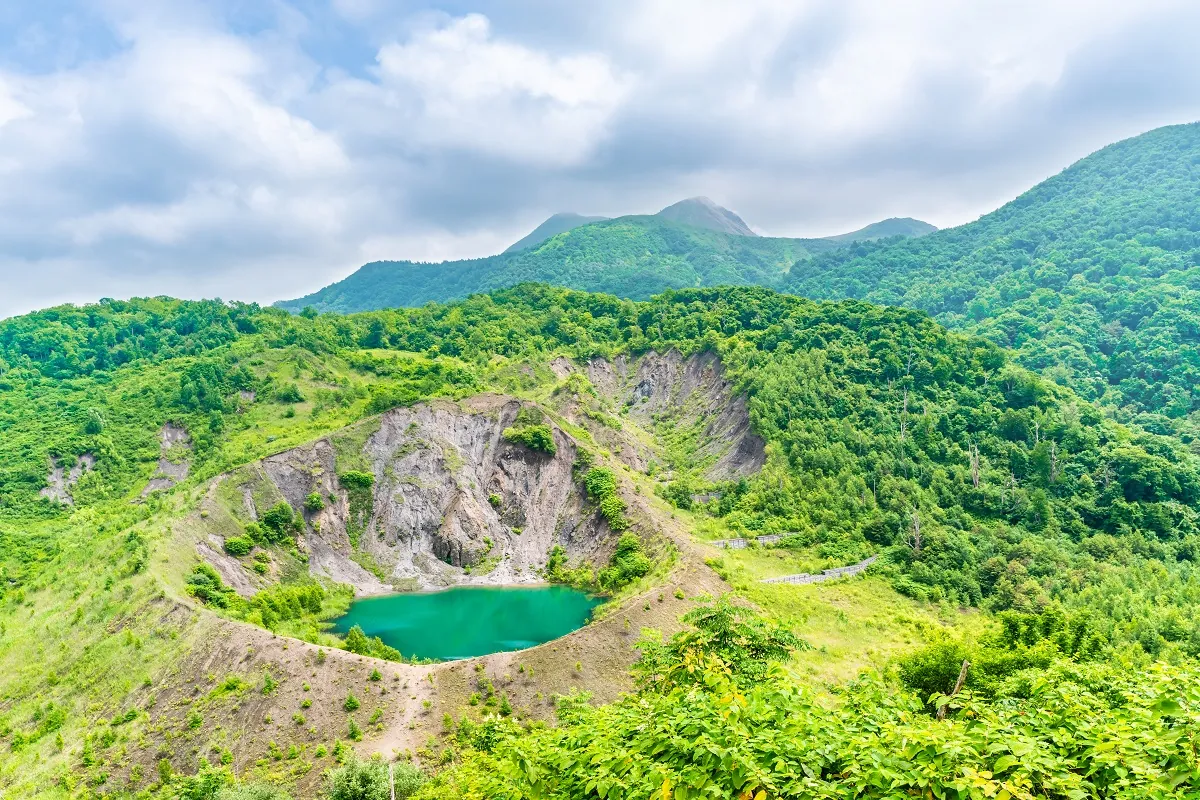
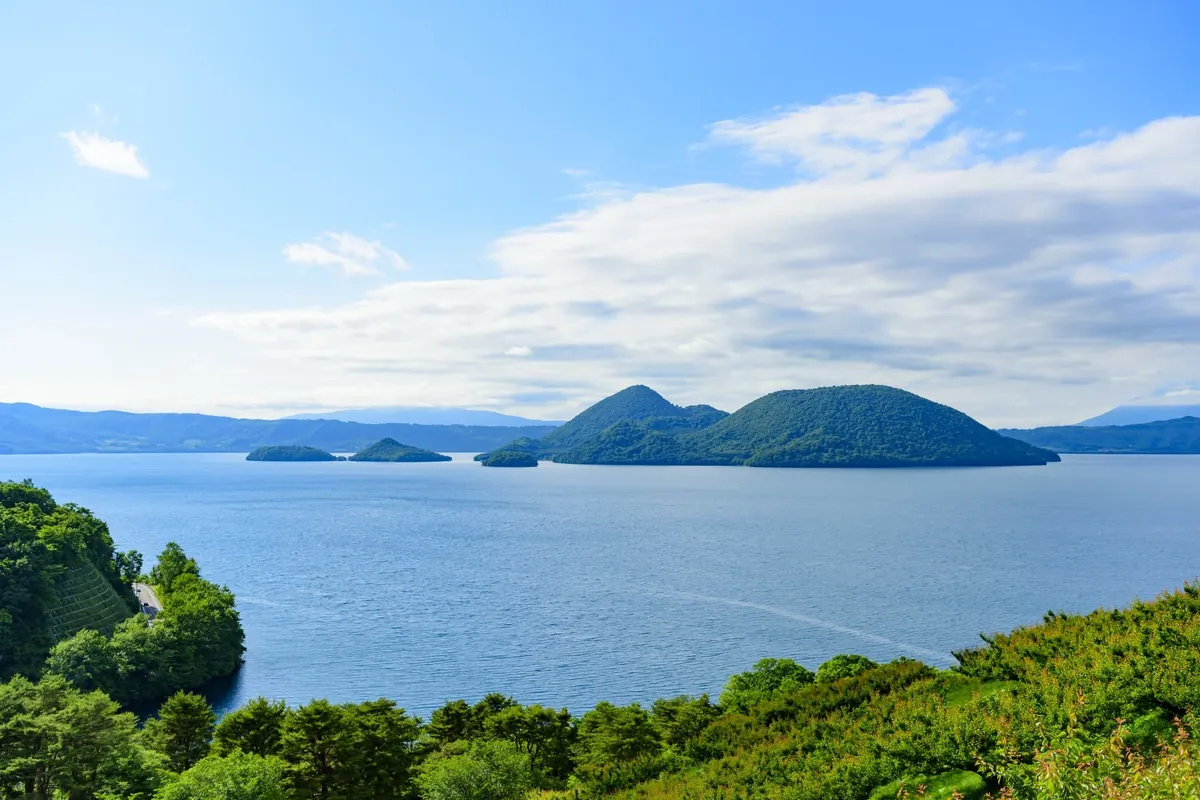
Crystal clear waters of Lake Toya with Mount Usu visible on the southern rim
The roadside station sits on the quiet northwestern shore—no resort development, just peaceful contemplation. Perfect for lunch.
Must-try: Seasonal vegetable soup made from nearby farms' morning harvest
Station 3: Sobetsu Information Center i (20 minutes south: Volcanic Heart)
The only roadside station I've visited with a dedicated Volcanic Disaster Learning Center. Here you'll learn the remarkable story of Shōwa-shinzan, the mountain born from a wheat field during WWII. When authorities wanted to keep the volcano secret (considered a bad omen), local postmaster Masao Mimatsu secretly documented its growth by drawing profiles on paper in his window. His "Mimatsu Diagram" earned international acclaim—and he later bought the entire mountain with his life savings, becoming the only private owner of a volcano in Japan.
The Farmers Market showcases apples from orchards dating to 1876, when Sobetsu's first trees were planted. One 120-year-old apple tree at Hamada farm still produces fruit today.
Must-try: Sobetsu Apple Jam, Sobetsu Apple Wine (limited quantities)
Station 4: Date Historical Forest (30 minutes southeast: Cultural Bridge)
Houses the Date Historical Culture Museum with Jomon-era artifacts dating back 7,000 years. The continuity is humbling—the same fertile volcanic soil that supported ancient communities still nourishes today's farms. Hands-on craft workshops available.
Must-try: Late-season strawberries, locally made miso, craft demonstrations
Station 5: Mitara Muroran (25 minutes south: Coastal Finale)
Your journey's climax: the iconic Hakuchō Ōhashi (White Bird Bridge) spanning Muroran's volcanic bay. At 1,380 meters long with a main span of 720 meters, this 1998-built suspension bridge is East Japan's largest. The winds are so powerful here that pedestrians and bikes are banned from crossing. Windmills along the bridge power its nighttime illumination—a fitting marriage of natural forces and human engineering.
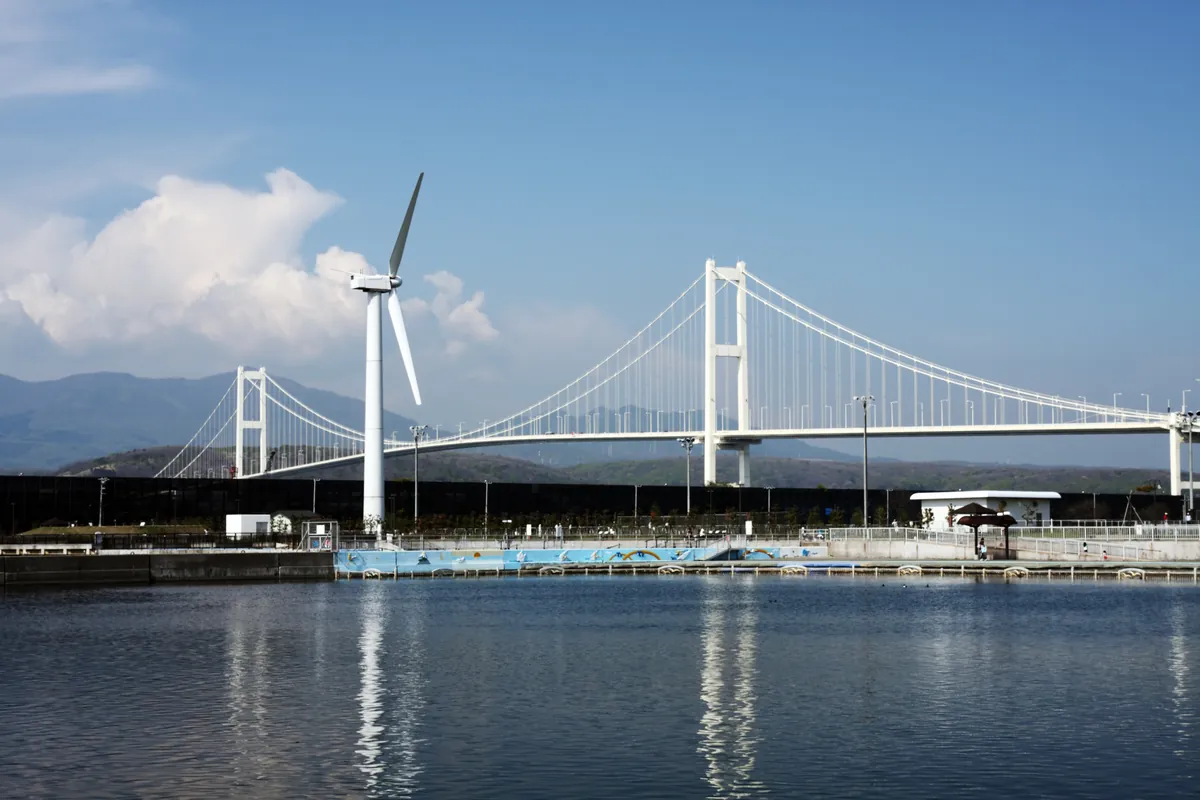
East Japan's largest suspension bridge
The second-floor museum tells the bridge's construction story with impressive honesty about volcanic engineering challenges. Best visited at sunset for the illuminated bridge view.
Must-try: Uzuran soft cream, Muroran yakitori, Bolta figures (iron art souvenirs)

Sobetsu Information Center i
384-1 Takinomachi, Sobetsu-cho, Usu-gun, Hokkaido
Discover the Heart of Hokkaido’s Natural and Cultural Heritage
Best Time to Visit
Timing dramatically affects both what you'll see and what you'll taste.
Late Spring (May-June) - Peak Season
This is when the volcanic circle truly shines. Snow has retreated from Mount Yotei's lower slopes, creating that perfect photographic moment of green valleys and snow-capped peaks. Roads are completely clear, weather is mild (15-20°C), and spring vegetables are at their peak.
What's in season:
- Fresh asparagus at Niseko (best: late May)
- Spring mountain vegetables
- Early strawberries at Date
- Cherry blossoms in the valleys (early May)
Summer (July-August) - Mountain Green
The mountains are at their greenest, and summer festivals bring communities together. Slightly warmer (20-25°C) but still comfortable. This is peak tourist season, so weekends can be crowded.
What's in season:
- Tomatoes and cucumbers with incredible flavor
- Hokkaido melons
- Corn so sweet you can eat it raw
- Mountain herbs and edible flowers
Early Autumn (September-October) - Harvest Glory
My personal favorite. Autumn colors paint the mountains while harvest brings abundance to every farm stand. The combination of golden leaves against blue caldera waters is pure visual poetry. Weather remains pleasant—cool but comfortable.
What's in season:
- Apple harvest at Sobetsu (peak: October)
- Kabocha squash and root vegetables
- New rice arrives at markets
- Mushrooms from mountain forests
Winter (November-March) - For Experienced Drivers Only
Heavy snow transforms the landscape into a winter wonderland, but unless you're comfortable with winter driving, skip this season. Many stations operate reduced hours, and icy roads can be treacherous.
If you're confident with snow:
- Virtually no tourists—peaceful solitude
- Fresh powder snow at Niseko (skiing nearby)
- Hot springs particularly appealing
- Winter vegetables with concentrated sweetness
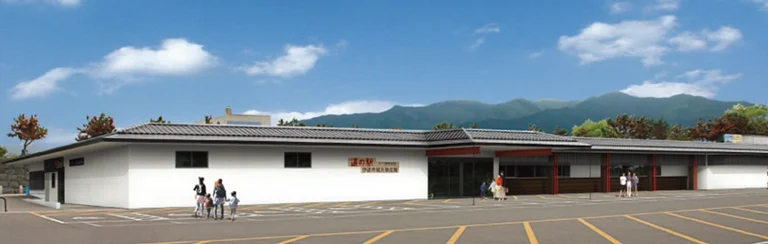
Date Historical Forest
34-1 Matsugaecho, Date City, Hokkaido
Discover the Living History of Hokkaido’s Heartland
Insider Tips: Maximizing Your Journey
After completing this route multiple times, here are the insights that will transform your experience:
Timing Your Stops:
The sweet spot for station visits is 10:00-10:30 AM. By then, morning harvests are processed and displayed, but you're ahead of the lunch rush that starts around 11:30 AM. Weekends see items sell out by early afternoon.
The Best Photo Opportunities:
- Mount Yotei from Niseko: Best light is early morning (8-9 AM) for mist-free views
- Lake Tōya reflection: Arrive by 1-2 PM before afternoon winds disturb the mirror surface
- White Bird Bridge: Sunset (around 6 PM) for the illuminated span against darkening sky
- Volcanic vents at Sobetsu: Visit on clear mornings to see steam rising dramatically
Money-Saving Strategies:
Cash is king at these stations. Many direct-sale farmers and smaller vendors don't accept cards. ATMs can be scarce between stations—I learned this the hard way.
Budget considerations:
- Deluxe lunch bowls: ¥1,200-1,800 (exceptional value)
- Fresh produce: ¥300-800 per item
- Artisanal products: ¥800-2,000
- Souvenirs: ¥500-3,000
Compared to Sapporo or Tokyo prices, this is extraordinary value for the quality.
What to Bring:
- Foam cooler if buying fresh produce (stations sell these)
- Cash in ¥1,000 bills (easier for small vendors)
- Offline maps downloaded (Google Maps allows regional downloads)
- Light jacket (mountain weather changes quickly)
Don't Skip the Museums:
The Shirotori Bridge Memorial Museum at Mitara Muroran and the Volcanic Disaster Learning Center at Sobetsu offer context that deepens your appreciation. Both are free or low-cost and take only 20-30 minutes.
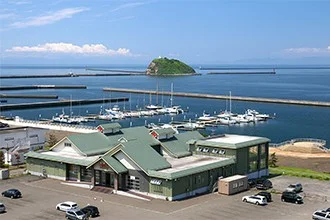
Mitara Muroran
4-16-15 Shukutsu-cho, Muroran City (along National Route 37)
Where History, Sky, and Sea Meet on the Edge of Hokkaido
Planning Your Journey: Practical Considerations
This route works best as a 1-2 day trip, allowing time to savor meals, browse markets, and take in views without rushing.
Route Strategy:
One-Day Express (6-7 hours total):
- Start: Niseko (9:30 AM)
- Lake Tōya (11:00 AM - lunch)
- Sobetsu (1:00 PM)
- Date (2:30 PM - brief stop)
- Muroran (4:00 PM - sunset)
Two-Day Recommended (allows proper exploration):
- Day 1: Niseko → Lake Tōya → Sobetsu (overnight near lake)
- Day 2: Date → Muroran → Sapporo/Hakodate
Accommodation Options:
Near Lake Tōya:
- Traditional ryokan with volcanic hot springs: ¥12,000-25,000
- Business hotels in Tōya town: ¥7,000-10,000
- Pension-style lodgings: ¥8,000-12,000
Near Muroran:
- Hotels with bridge views: ¥8,000-15,000
- Business hotels: ¥6,000-9,000
Many accommodations offer kaiseki dinners featuring ingredients from the roadside stations you just visited.
Transportation Requirements:
Rental car is essential—public transportation along this route is minimal. Major agencies have GPS systems with English interfaces.
Driving times between stations:
- Niseko → Lake Tōya: 40 minutes
- Lake Tōya → Sobetsu: 20 minutes
- Sobetsu → Date: 30 minutes
- Date → Muroran: 25 minutes
Total if driven straight: 2 hours
Recommended with stops: 6-8 hours minimum
Road Conditions:
Routes 230, 453, and 37 are well-maintained two-lane highways with regular rest stops. Cell coverage is generally good, though it can become spotty in mountain sections. Traffic is light except during summer weekends.
The Journey's Deeper Meaning
What I've learned from this volcanic circle goes beyond food and scenery. It's about understanding how geological forces shape not just landscapes but entire cultures.
Every apple from Sobetsu, every vegetable from Niseko, every piece of Muroran yakitori carries within it the story of volcanic soil transforming into food through the alchemy of farming. The Jomon people who lived here 7,000 years ago thrived for the same reasons modern communities do: fertile soil, abundant water, and the willingness to understand and respect the forces beneath their feet.
The roadside stations aren't just convenience stops—they're interpretive centers where geology becomes tangible. Where local pride takes the form of heirloom apple varieties and handcrafted iron figures. Where the dialogue between nature and culture produces something worth celebrating.
Here's the beautiful irony: This route is only 120 kilometers. You could drive it in two hours without stopping. But why would you? Every station offers a reason to pause, to taste, to learn, to look more closely at the land and the communities it supports.
The volcanic circle isn't just a route through southwestern Hokkaido. It's an invitation to understand how fire and ice, eruption and erosion, danger and opportunity have shaped one of Japan's most distinctive landscapes—and how the people who live here have turned geological drama into everyday beauty.
Practical Information
Best time to visit: Late spring through autumn (May-October) offers the best weather and fullest selection of seasonal produce. Winter travelers will face snow but can enjoy hot springs and winter-specific foods.
Route overview: Approximately 120km from Niseko to Muroran via Lake Tōya area. Allow 2-3 days for a leisurely journey with time to explore each station.
Don't miss:
- Fresh morning asparagus at Niseko View Plaza (spring)
- Apple wine tasting at Sobetsu (year-round, limited quantities)
- Sunset bridge viewing at Mitara Muroran
- Shell mound museum at Date Historical Forest
Insider tip: Visit stations on weekday mornings to avoid crowds and ensure the best selection of limited-production items. Many specialty foods sell out by afternoon, especially on weekends.
Featured Stations: In-Depth Highlights
Of the 5 stations on this route, we've highlighted 5 exceptional stops that truly embody the region's unique character. Each offers unique experiences worth making time for.
Niseko View Plaza
77-10 Motomachi, Niseko-cho, Abuta-gun (along National Route 5)
Discover the Heart of Niseko at Niseko View Plaza
Toya Lake
9-4 Kagawa, Toyako-cho, Abuta-gun (along National Route 230)
Discover the Heart of Hokkaido’s Natural Beauty
Sobetsu Information Center i
384-1 Takinomachi, Sobetsu-cho, Usu-gun, Hokkaido
Discover the Heart of Hokkaido’s Natural and Cultural Heritage
Date Historical Forest
34-1 Matsugaecho, Date City, Hokkaido
Discover the Living History of Hokkaido’s Heartland
Mitara Muroran
4-16-15 Shukutsu-cho, Muroran City (along National Route 37)
Where History, Sky, and Sea Meet on the Edge of Hokkaido
Jessica Muller
European travel writer based in Japan for the past four years. Explores rural communities and regional culture across the country, bringing authentic stories of local life to Western readers.