
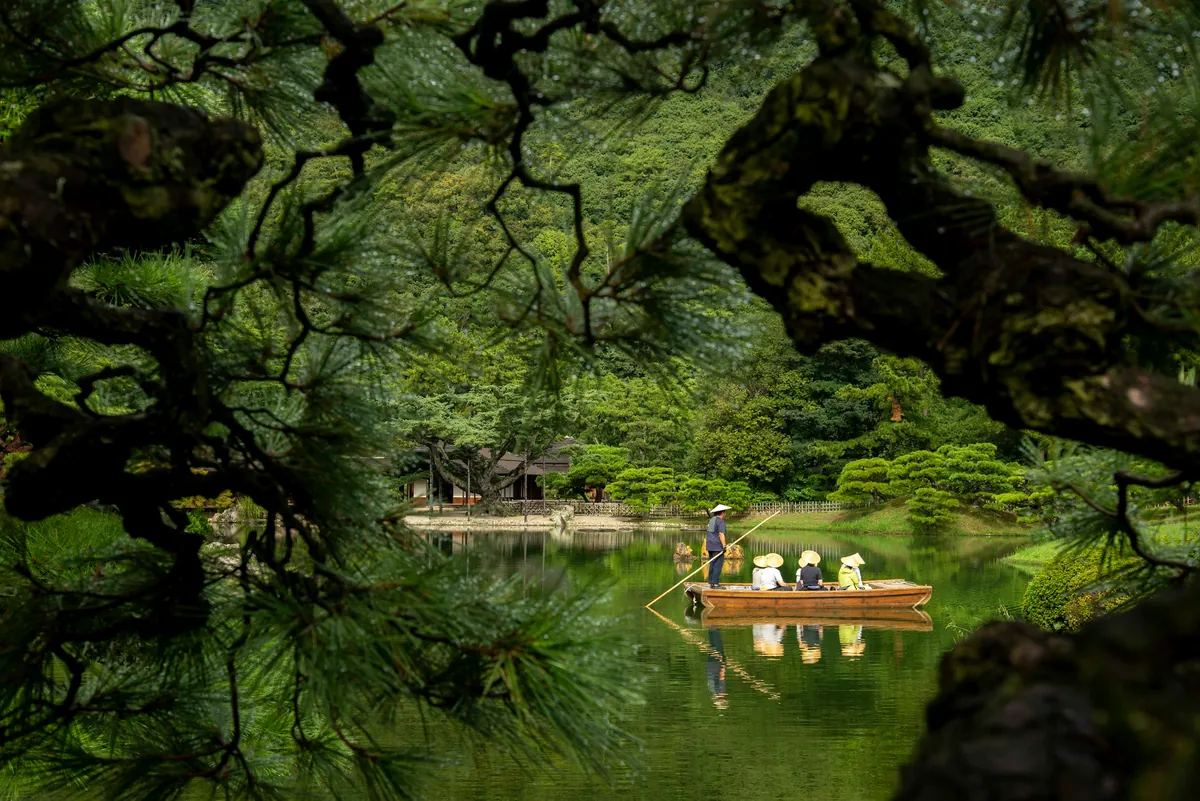
The 200-kilometer drive from Omishima Island to Cape Muroto traces one of Japan's most rewarding scenic routes, passing through all four prefectures of Shikoku while connecting two dramatically different seas. This roadside station journey through Ehime, Kagawa, Tokushima, and Kochi climbs from the tranquil Seto Inland Sea, where ancient shrines guard islands dotted with camphor trees older than empires, through mountain valleys carved by the Yoshino River, and finally descends to the rugged Pacific Ocean coastline, where waves have shaped a UNESCO Global Geopark over millions of years. Along the way, five exceptional michi-no-eki offer not just rest stops, but gateways to understanding how geography has shaped culture, from samurai battlefields to paper-making villages that have perfected their craft for over a thousand years.
From Sacred Seas to Pacific Shores
A 200km scenic traverse of Shikoku, connecting the serene Seto Inland Sea to the dramatic Pacific coast through five cultural roadside stations.
Sacred Island Gateway: Omishima
The journey begins where the Shimanami Kaido's graceful bridge spans meet Omishima Island, the spiritual heart of Ehime Prefecture. Here, at Shimanami-no-Eki Omishima, you're standing at the gateway to one of Japan's most sacred landscapes—a place where cycling pilgrims and history seekers converge at the doorstep of Ōyamazumi Shrine, a sanctuary that has guarded the nation since 594 CE.
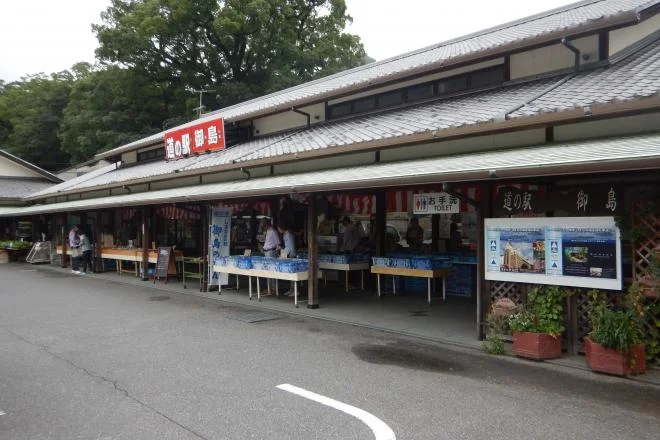
Shimanami-no-Eki Omishima
3260 Miyaura, Omishima-cho, Imabari, Ehime Prefecture
Discover the Heart of Shimanami: Where Nature, Culture, and Cycling Converge
The Protector Shrine of Japan
Walk just seven minutes from the roadside station, and you'll enter the grounds of a shrine designated as Nihon Sochinju—"Protector Shrine of Japan." Established by Emperor Suiko in 594, relocated to its current site in 701, and completed in 716, this sanctuary has drawn emperors, generals, and warriors for over 1,300 years. But it's what stands at the center that truly stops you in your tracks: a sacred camphor tree believed to be 2,600 years old, its massive trunk twisting skyward like a living monument to time itself.
Designated a national natural monument in 1951, this ancient giant is part of Japan's oldest primeval cedar forest. Local legend holds that it was planted by Ochi no Mikoto, a descendant of the mountain god Ōyamazumi no Kami himself. Stand beneath its canopy, and you're sharing air with a tree that witnessed the rise and fall of countless dynasties.
- 2,600-year-old sacred camphor tree (national monument)
- Shrine founded 594 CE, completed 716 CE
- Holds 80% of all armor and weaponry registered as National Treasures in Japan
- Home to armor donated by Minamoto no Yoshitsune and Minamoto no Yoritomo
Where Warriors Prayed
Before heading into battle, members of the Taira and Minamoto clans made pilgrimage here, donating swords and armor as votive offerings. Today, the shrine's treasure hall holds an astonishing 80% of all armor and weaponry designated as National Treasures in Japan—including the legendary red-silk armor believed to have been offered by Minamoto no Yoritomo himself, and pieces from his brilliant younger brother, Yoshitsune, whose tactical genius would soon reshape Japanese history.
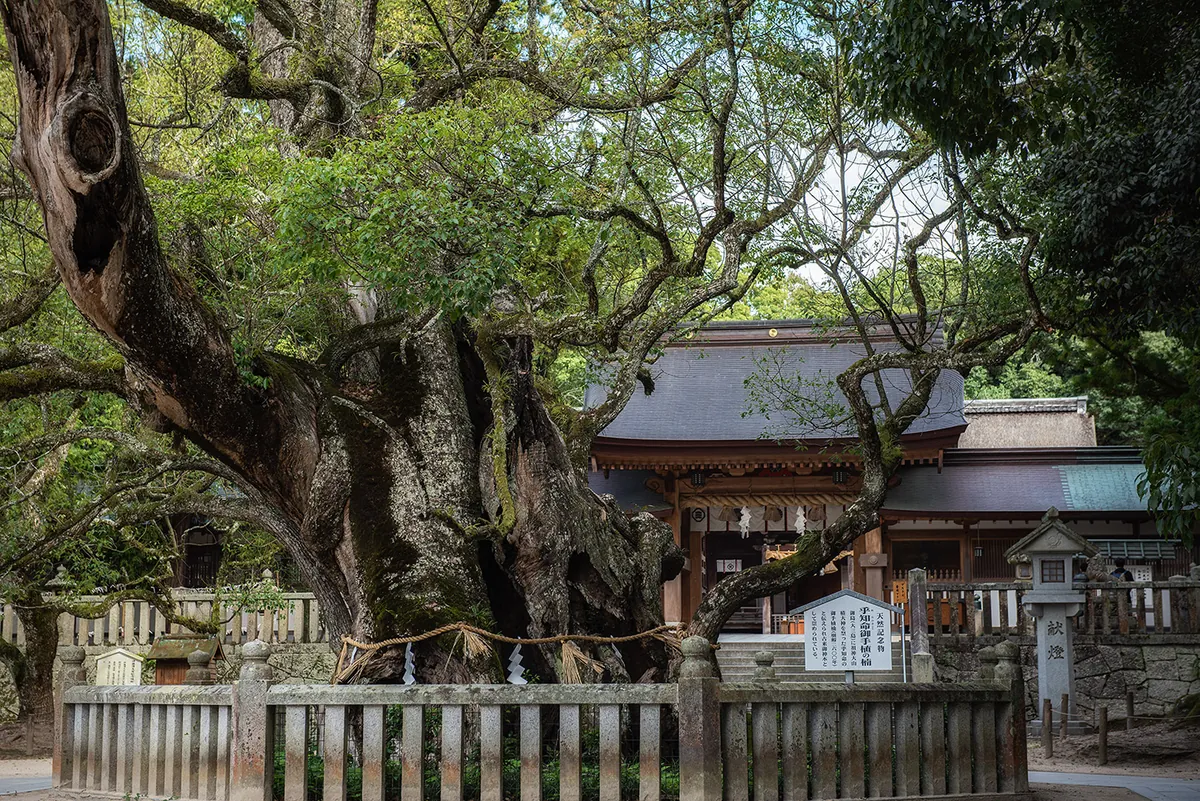
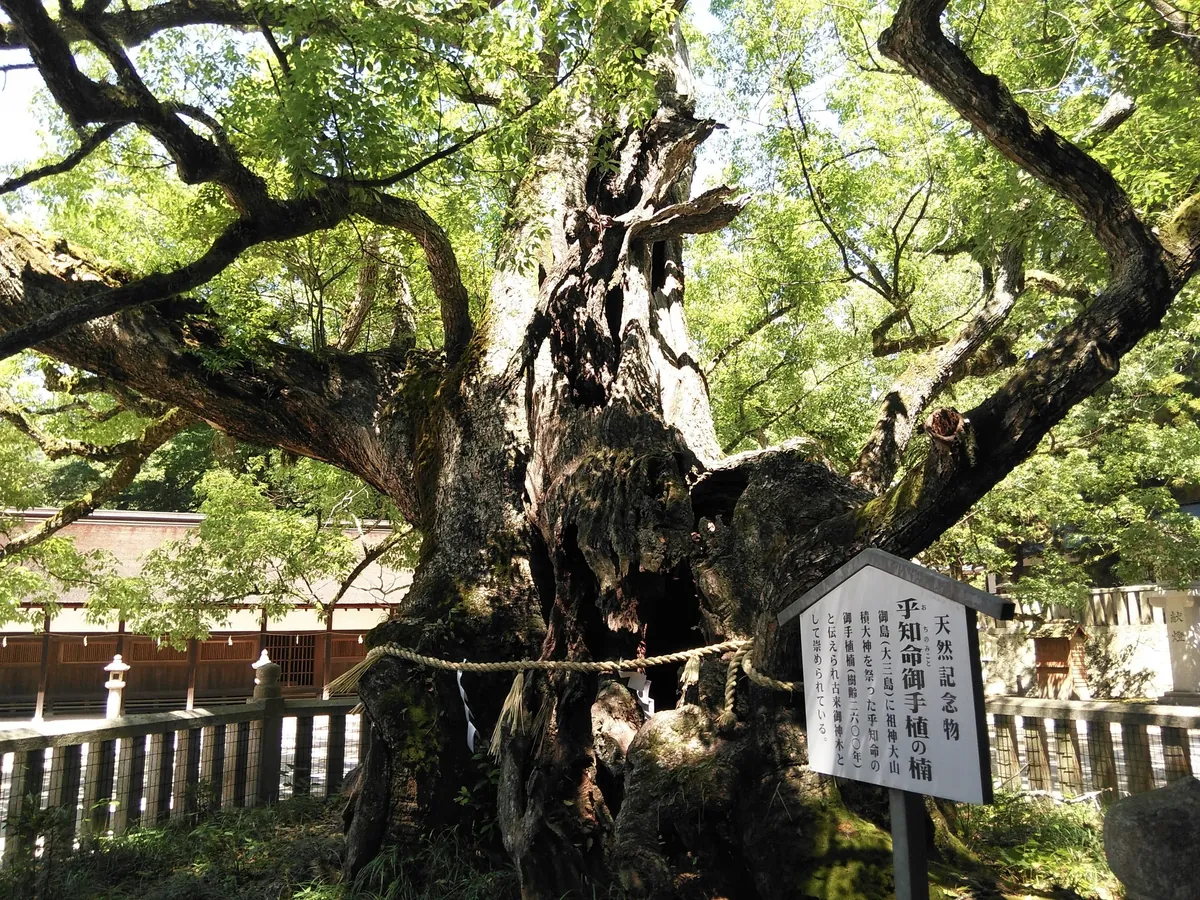
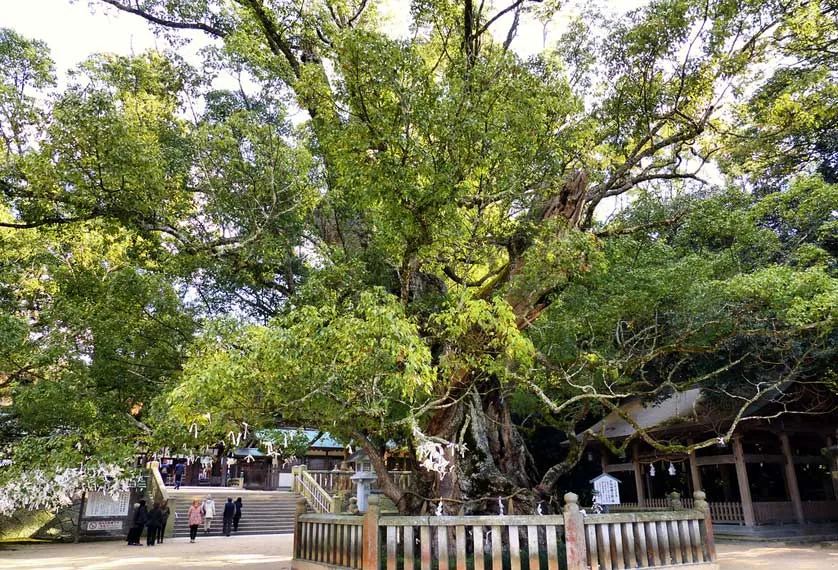
The sacred 2600-year-old camphor tree at Ōyamazumi Shrine on Omishima Island
The Cyclist's Sanctuary
Back at the roadside station, modern pilgrims of a different sort prepare for their own journeys. Shimanami-no-Eki Omishima serves as the only bike rental terminal for the entire Shimanami Kaido cycling route, complete with showers, lockers, and drop-off points. The market stalls overflow with the island's famous citrus fruits—Kishu mikan, ponkan, iy okan—and fresh seafood from the surrounding sea. Grab a bag of locally made citrus jam or a box of dried fish snacks before you leave. You'll want the energy for what comes next.
Where History Changed Course: The Genpei Battlefield
Heading northeast along the coast for 40 kilometers, you cross from Ehime Prefecture into Kagawa, where the landscape opens onto the shimmering expanse of the Seto Inland Sea. Here, at Genpeino Sato Mure in Takamatsu City, you're standing on one of Japanese history's most consequential battlefields.
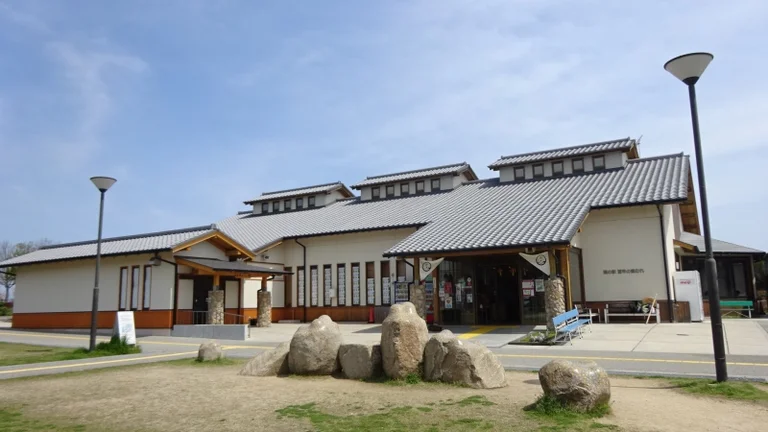
Genpeino Sato Mure
631-5 Mure-cho Hara, Takamatsu, Kagawa
Step Into the Heart of History and Sea Breezes
March 22, 1185: The Battle of Yashima
On this very ground, the fate of Japan hung in the balance. Following a catastrophic defeat at the Battle of Ichi-no-Tani on February 7, 1184, the Taira clan retreated here to Yashima, establishing a fortress and an improvised palace for the child Emperor Antoku and the sacred imperial regalia they'd taken earlier in the war. They believed the sea at their backs provided protection.
They were wrong.
Minamoto no Yoshitsune—the same warrior whose armor you might have glimpsed at Omishima—crossed the Seto Inland Sea from Settsu Province (modern Osaka) to Awa Province (now Tokushima), then led his forces on a grueling 60-kilometer overland march through the mountains. He attacked from behind, where the Taira least expected.
The surprise was total. The Taira abandoned Yashima and fled westward, sailing toward what would become their final confrontation just two days later at Dannoura on March 24, 1185—the battle that would end the Genpei War and usher in seven centuries of samurai rule.
Tasting History's Bounty
Today, Genpeino Sato Mure stands as Shikoku's first disaster-resilient roadside station, equipped with solar power and emergency systems—a modern fortress of a different kind. But what draws travelers here is simpler: the self-service seafood restaurant Jako-ya, where the day's catch from the Seto Inland Sea is displayed cafeteria-style. For just 100 to 600 yen per item, you can build your own plate of grilled sea bream, fresh sashimi, steamed clams, and tempura vegetables.
Outside, Mofunohara Park spreads across the bluff, offering panoramic views of the islands where the Taira made their last stand. A vintage Kotoden train car sits on display, playground equipment dots the lawn, and informational plaques mark the battle sites. On weekends, the adjacent market bursts with local farmers selling Kagawa's famous sanuki udon, seasonal vegetables, and the curious "blessing bonito candy"—a sweet inspired by the region's lucky yellowtail fish.
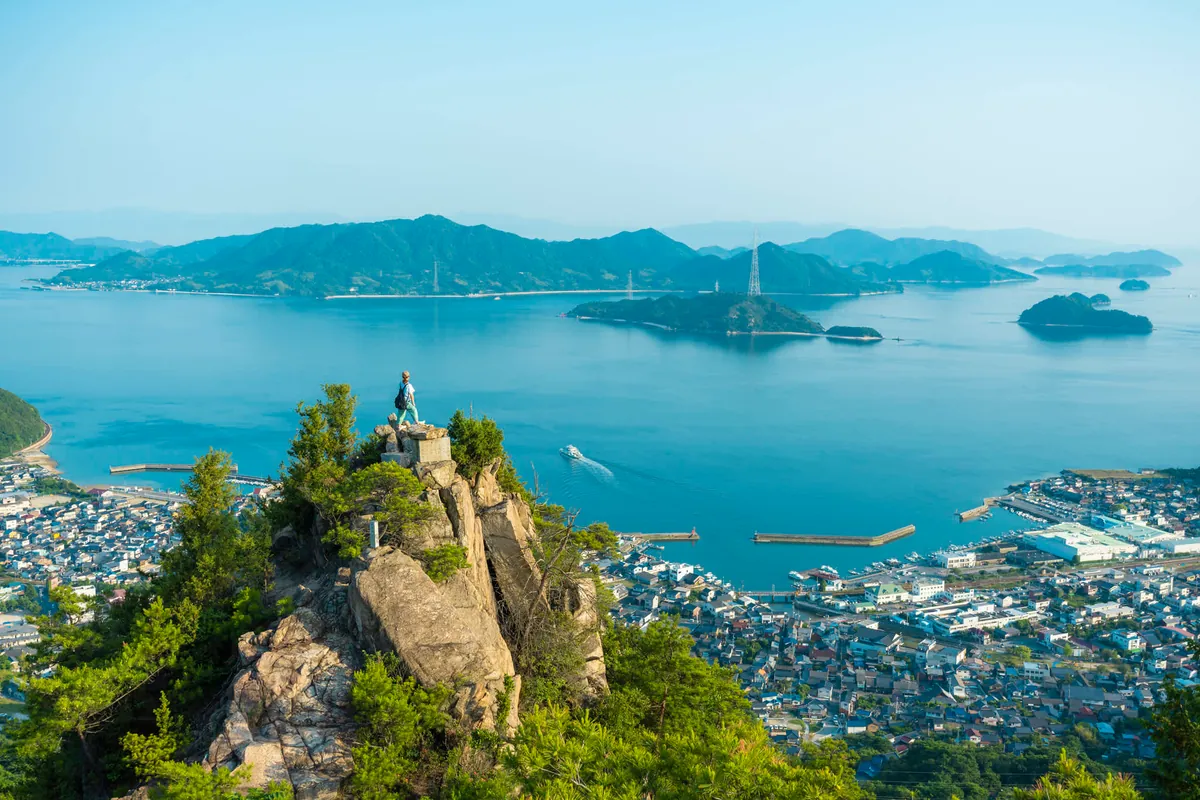
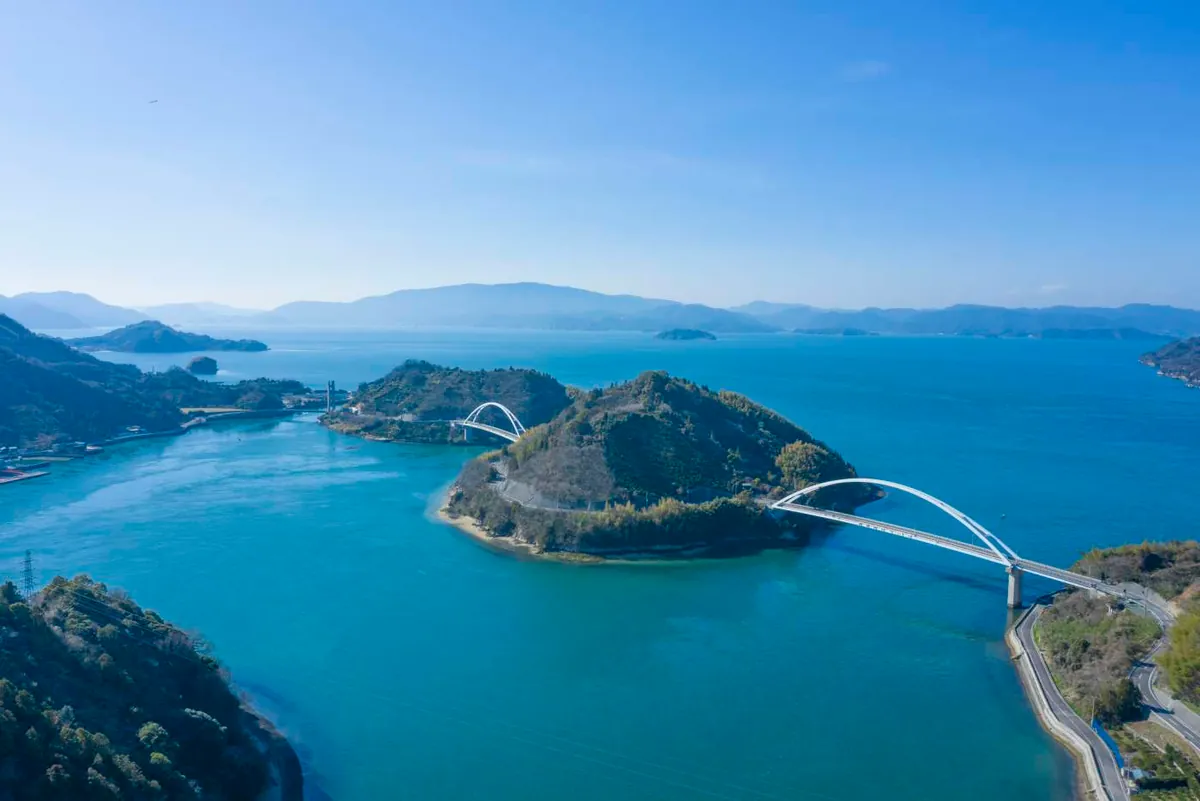
The serene Seto Inland Sea with its countless islands
River Valley Interlude: Mino's Agricultural Heart
Leaving the coast behind, you turn southwest into the mountains, crossing into Tokushima Prefecture. After 40 kilometers of climbing roads that wind through cedar forests and terraced fields, you arrive at Mino roadside station, perched on a high ridge overlooking the Yoshino River.
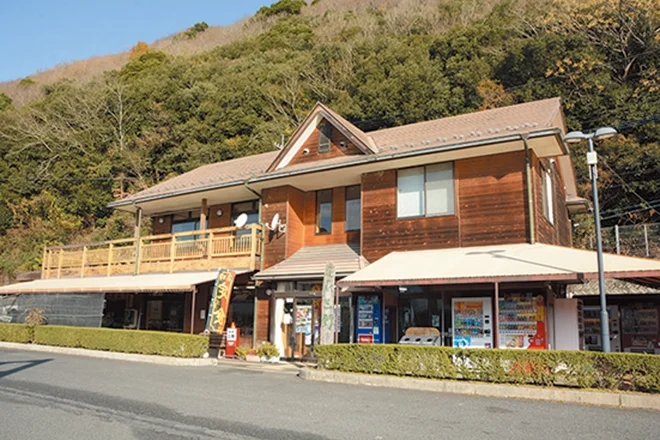
Mino
1909-1 Tachinomachi, Mino, Miyoshi, Tokushima
Discover the Heart of Shikoku’s Natural Beauty and Farm-to-Table Tradition
Sunset Over the Sanko-Taro
The Yoshino River—known affectionately as Shikoku's Sanko-Taro (四国三郎, "Shikoku's Third Son")—has carved a wide, gentle valley through the mountains here. During summer, you'll see anglers wading into the shallows, fishing for the prized ayu (sweetfish) using traditional methods passed down for generations. But it's the sunset that defines Mino: arrive by 5:00 PM on a clear evening, and you'll witness golden light spilling across the water's surface, turning the entire valley into a burnished mirror.
Farm-to-Table Tradition
The station itself embodies Tokushima's commitment to local materials—the entire two-story wooden structure is built from Tokushima-produced timber, milled and joined using traditional techniques. Inside, Mother's Kitchen serves meals centered around Mino-grown rice, vegetables picked that morning from surrounding farms, and the region's distinctive pickled vegetables prepared using recipes older than the prefecture itself.
Don't leave without trying:
- Mino Monomanzhū (みのにもんたまんじゅう)—a local sweet whose playful name means "returning to Mino"
- Momiji dango—traditional rice-flour dumplings with sweet soy sauce
- Mino Longqing Roll—a pastry inspired by the 16th-century warlord Miyoshi Chōkei, who once ruled these mountains
The agricultural market spills over with seasonal bounty: bamboo shoots in spring, tomatoes and cucumbers in summer, persimmons in fall, and hearty mountain vegetables throughout the year.
Nature's Cathedral
If you have time, ask about the trails to Ryuzu Falls and Kongo Falls—two rare waterfalls hidden in the surrounding Asan Mountains. The Miyoshi Nature and Friendship Forest nearby offers camping, charcoal-making workshops, and walking paths through stands of ancient cedars that rival those at Omishima.
One Thousand Years of Paper: Tosa Washi Craft Village
From Mino, the route descends 60 kilometers south, dropping elevation as you cross into Kochi Prefecture. The road follows the Niyodo River—often called Japan's clearest river—upstream to its source in the mountains. Here, at Tosa Washi Craft Village in Ino Town, you enter a world where tradition hasn't just survived; it's thrived for over a millennium.
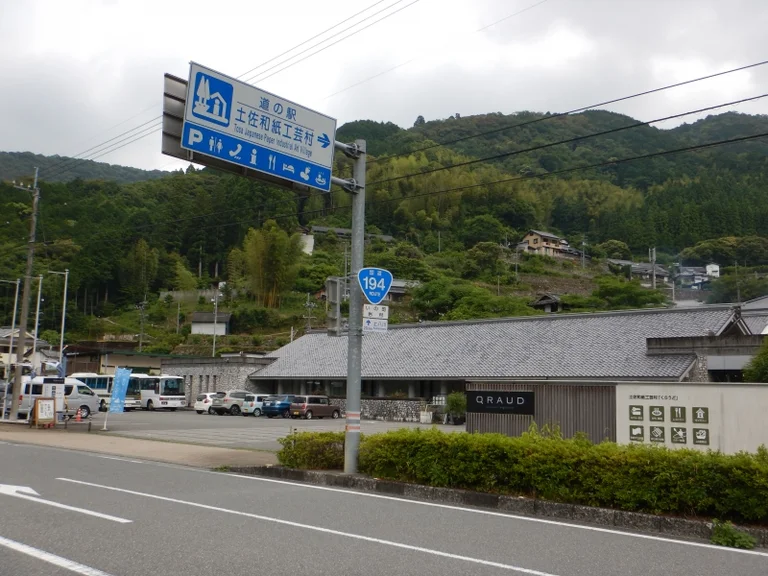
Tosa Washi Craft Village
1226 Kashiki, Ino Town, Agawa District, Kochi Prefecture
Discover the Living Legacy of Japanese Craftsmanship
A Craft Older Than Feudalism
Tosa washi appears in the Engishiki, a codex of regulations compiled during the Heian Period (794-1185), listed among the tributes sent to the imperial court. The poet and Provincial Governor Tsurayuki Kino, author of the famous Tosa Diary, actively encouraged papermaking here in the 10th century. By the time the samurai class rose to power, Ino Town had already been perfecting its craft for three hundred years.
In 1976, the Japanese government officially designated Tosa washi as a traditional craft, recognizing its exceptional quality. Today, artisans in Ino Town produce approximately 300 varieties of washi paper—more than any other region in Japan—ranging from tissue-thin sheets barely thicker than air to robust papers strong enough for furniture construction.
The Secret: Pure Water and Patient Hands
What makes Tosa washi extraordinary begins with the Niyodo River. Its water, filtered through limestone bedrock, emerges so pure and mineral-balanced that it allows paper fibers to bond with exceptional strength and uniformity. Combined with locally grown paper mulberry (kōzo) and mitsumata plants, the result is paper that's simultaneously thin, strong, and luminous.
At the roadside station's papermaking studio, you can experience this thousand-year-old process firsthand:
- Soak and steam the bark of paper mulberry plants
- Beat the fibers into a pulp using traditional wooden mallets
- Mix the pulp with tororo-aoi (a plant-based binding agent) and water
- Use a bamboo screen to lift and shake the mixture, forming sheets layer by layer
- Press and dry your creation on wooden boards in the sun
Your hands follow the same motions that artisans have repeated here for a thousand years. The muscle memory of an entire culture flows through these simple gestures.
Beyond Paper
The roadside station complex includes several surprises. The restaurant serves meals featuring Kochi's famous katsuo tataki (seared bonito), yuzu-infused vegetables, and seasonal river fish. The Ino-cho Paper Museum displays everything from ancient manuscripts to contemporary art pieces, all created with local washi. And the attached Qua House offers hot spring baths (open 11:00 AM to 9:00 PM) with water rich in natural minerals—perfect for soaking muscles tired from the drive.
Outside, the Namekawa Submerged Bridge spans the Niyodo River in the traditional style: a low concrete structure designed to be submerged during floods, preserving the river's natural flow patterns. Walk across it during low water, and you'll understand the relationship between human infrastructure and natural forces that defines life in these mountains.
Land's End: Cape Muroto and the Pacific
The final 65-kilometer leg carries you southeast, following the Niyodo River downstream until it empties into the Pacific Ocean, then hugging the coastline as it grows increasingly dramatic. Mountains plunge directly into the sea. Waves that have traveled across thousands of miles of open ocean crash against cliffs sculpted over 15 million years of geological time.
At the headland's tip, where the land juts into the Pacific like a ship's prow, you arrive at Kiramesse Muroto.
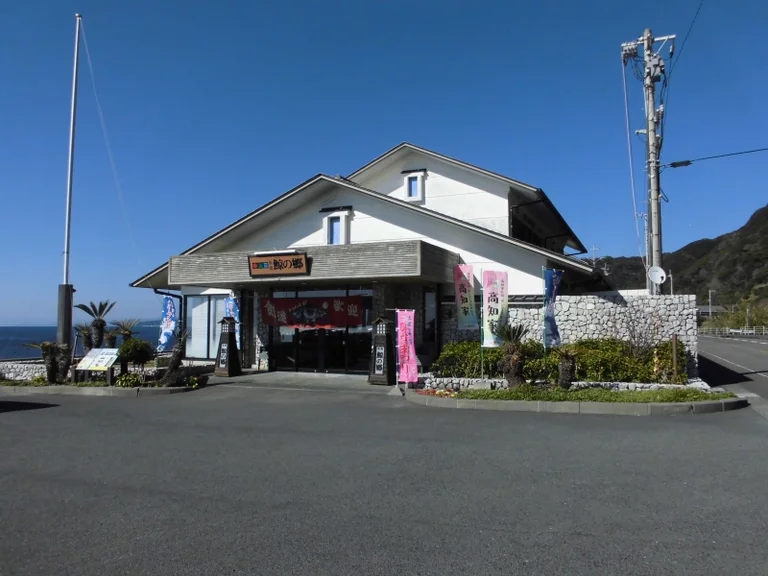
Kiramesse Muroto
890-11 Kiragai-cho, Muroto City, Kochi Prefecture
Discover the Heart of Shikoku’s Coastal Heritage
Where Continents Collide
Cape Muroto is a UNESCO Global Geopark (designated 2011), one of the few places on Earth where you can literally watch tectonic plates in action. The Philippine Sea Plate is diving beneath the Eurasian Plate here, pushing the cape upward at a rate of 1-2 millimeters per year. Walk the trails along the cape, and you'll see layers of rock tilted at impossible angles—seafloor that was two kilometers deep 15 million years ago, now exposed to air and light.
The Muroto Global Geopark Center, located at the roadside station, explains this dramatic geology through interactive exhibits and 3D models. Step outside, and the landscape becomes your classroom: raised marine terraces, wave-cut platforms, and distinctive turbidite (underwater landslide deposits) stretch in all directions.
The Whale's Tale
For centuries, Cape Muroto supported a vibrant coastal whaling industry. Small boats would launch from protected coves, hunting the whales that migrated along this coast each year. At the station's Whale Museum, digital exhibits trace this relationship between humans and cetaceans, showing everything from traditional hunting methods to modern whale-watching techniques.
Today, you're more likely to see whales from the deck of a tour boat than from a whaling vessel. Humpback whales, sperm whales, and minke whales pass through these waters from June through August, and local operators offer tours that bring you face-to-face with these giants of the deep.
And then there's the food. The restaurant Shiyu offers a menu unlike anywhere else on Shikoku: whale tail steak. This delicacy, served in a special limited-time set meal, connects you to centuries of local tradition. The meat is rich, dark, and surprisingly tender—a taste of history on a plate.
The Daruma Sunset
But the cape's most magical moment requires nothing more than timing and patience. Arrive between 4:30 PM and 5:15 PM from November through February, position yourself at the southern overlook, and watch the horizon as the sun descends.
As the sun touches the sea, atmospheric refraction—caused by temperature differences between ocean and air—begins to distort its shape. The bottom appears to stretch downward while the top compresses, creating the distinctive silhouette of a daruma doll: round-bodied, flat-bottomed, impossibly balanced. For a few breathless moments, the sun becomes something otherworldly, a trick of physics that transforms ordinary sunset into ritual.
This is one of the only places in Japan where you can witness both a daruma sunrise and a daruma sunset from the same location. The locals call it a blessing.
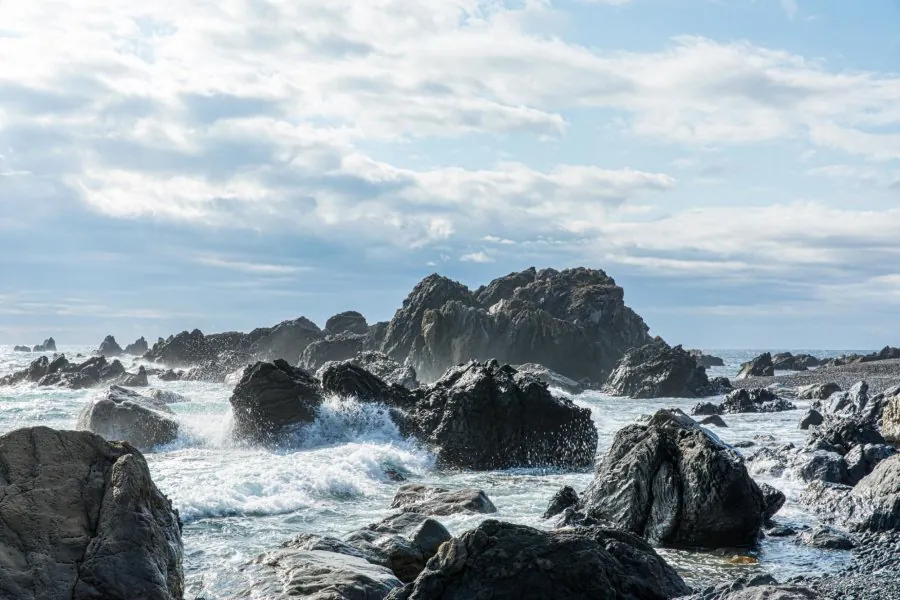
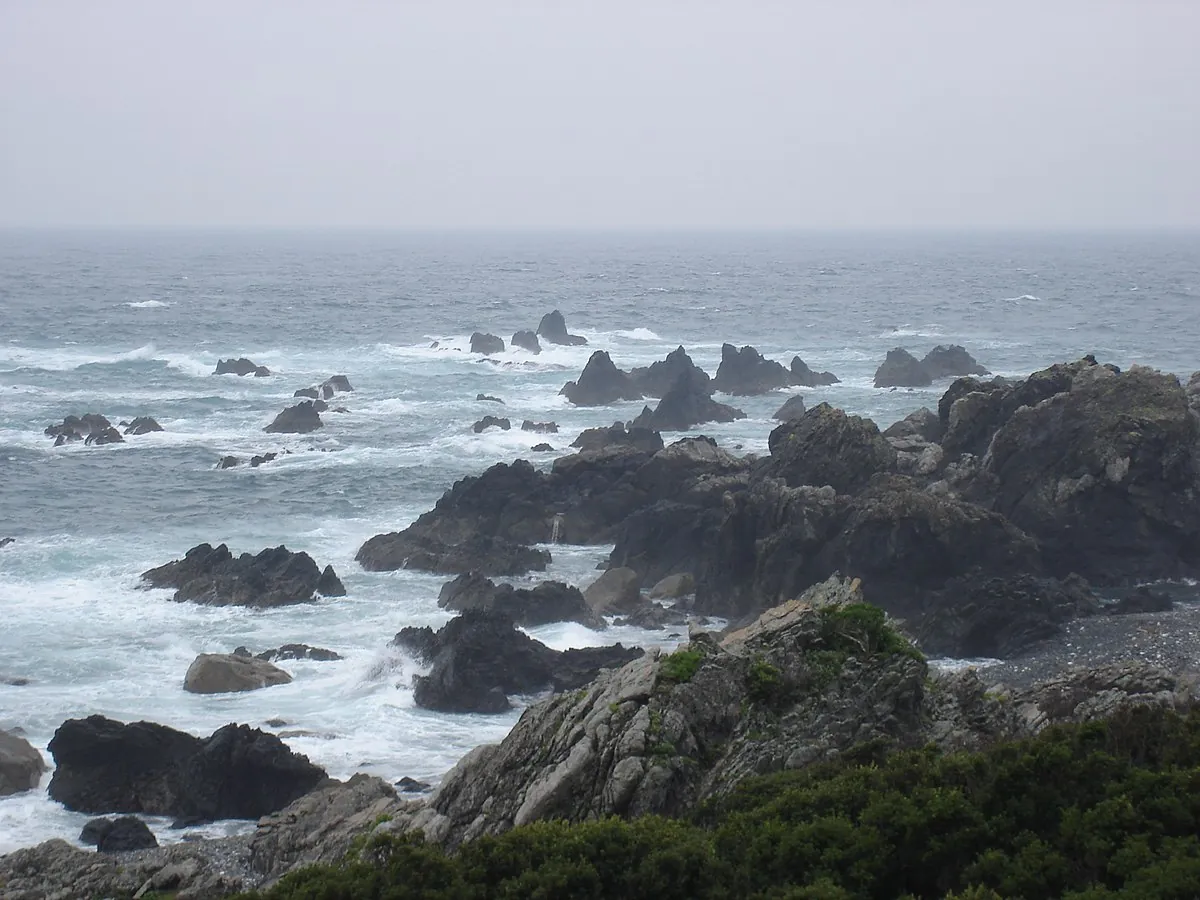
Cape Muroto jutting dramatically into the Pacific Ocean
Local Flavor
Before you leave, explore the Rakushi direct sales market at the roadside station. Open from 8:30 AM to 5:00 PM, it overflows with Muroto's agricultural treasures:
- Early-harvest tea picked in the warming Pacific microclimate
- Sweet watermelons grown in coastal sand
- Loquats and ponkan citrus from hillside orchards
- Tosa binchotan charcoal—prized by chefs for its clean, long-lasting heat
- Local honey collected from the cape's wildflower meadows
The produce here tastes different from anything you'll find inland. The salt air, constant wind, and intense sunshine create flavors that are simultaneously sweeter and more concentrated—vegetables and fruits that taste like the sea and sun.
Two Seas, Four Prefectures, One Island
This 200-kilometer journey from Omishima to Muroto does more than connect two coastlines. It reveals how geography shapes culture, how history lives in the present, and how five thoughtfully placed roadside stations can transform a drive into an education.
You've traced the path that Minamoto no Yoshitsune reversed in 1185, crossing from sea to mountain and back to sea. You've stood beneath a tree older than Buddhism in Japan, walked a battlefield where the samurai age was born, learned a craft perfected over a thousand years, and watched the sunset transform itself through the laws of physics into something that looks like magic.
Shikoku—the smallest of Japan's four main islands—holds an outsized portion of the country's soul. The 88-temple pilgrimage circuit wraps around its perimeter, drawing seekers who walk for weeks to complete their journey. This roadside station route traces a different kind of pilgrimage, one measured in kilometers rather than steps, but no less meaningful for those willing to pay attention.
From the serene Seto Inland Sea to the wild Pacific Ocean, from ancient shrines to living traditions, from samurai battlefields to UNESCO geoparks—this is Shikoku in microcosm: layered, surprising, and quietly profound.
Plan your journey for two to three days, allowing time to linger at each station, explore the surrounding landscapes, and taste the regional specialties that make each prefecture distinct. Spring brings cherry blossoms and early tea harvests. Summer offers whale-watching and river swimming. Autumn paints the mountains in crimson and gold. Winter delivers those rare daruma sunsets at Cape Muroto.
The road awaits. Two seas bookend your journey. Between them lies all of Shikoku.
Featured Stations: In-Depth Highlights
Of the 5 stations on this route, we've highlighted 5 exceptional stops that truly embody the region's unique character. Each offers unique experiences worth making time for.
Shimanami-no-Eki Omishima
3260 Miyaura, Omishima-cho, Imabari, Ehime Prefecture
Discover the Heart of Shimanami: Where Nature, Culture, and Cycling Converge
Genpeino Sato Mure
631-5 Mure-cho Hara, Takamatsu, Kagawa
Step Into the Heart of History and Sea Breezes
Mino
1909-1 Tachinomachi, Mino, Miyoshi, Tokushima
Discover the Heart of Shikoku’s Natural Beauty and Farm-to-Table Tradition
Tosa Washi Craft Village
1226 Kashiki, Ino Town, Agawa District, Kochi Prefecture
Discover the Living Legacy of Japanese Craftsmanship
Kiramesse Muroto
890-11 Kiragai-cho, Muroto City, Kochi Prefecture
Discover the Heart of Shikoku’s Coastal Heritage
Jessica Muller
European travel writer based in Japan for the past four years. Explores rural communities and regional culture across the country, bringing authentic stories of local life to Western readers.