The Pacific Ocean has carved Japan's eastern edge into one of the world's most varied coastlines—from Hokkaido's volcanic shores through Tohoku's resilient fishing villages, down past Tokyo's industrial harbors to the sacred inlets of Mie, and finally to Kyushu's extraordinary tidal flats. Spanning over 1,500 kilometers, this journey connects communities that live by the sea's rhythms.
I've driven the length of this coast more times than I can count, and the best coastal roadside stations in Japan share a singular quality: they don't just serve the ocean's bounty—they embody it. These seven michi-no-eki stretch from Hokkaido to Kumamoto, each one offering travelers an authentic window into Pacific coast Japan. From natural geysers to imperial loquats, from pearl-diving traditions to the nation's greatest tidal range, these stations are worth every kilometer of the drive.
Japan's Pacific Coast Roadside Stations
Seven unforgettable coastal michi-no-eki spanning 1,500 kilometers from Hokkaido to Kyushu along Japan's Pacific coastline
1. Shikabe Geyser Park: Where Earth Meets Ocean
道の駅 しかべ間歇泉公園 (Michi-no-Eki Shikabe Kanketsusen Kōen)
Shikabe Geyser Park
18-1 Aza Shikabe, Shikabe-cho, Kayabe-gun (Onuma Park-Shikabe Line, Hokkaido Route 43)
Where Nature’s Power Meets Coastal Comfort
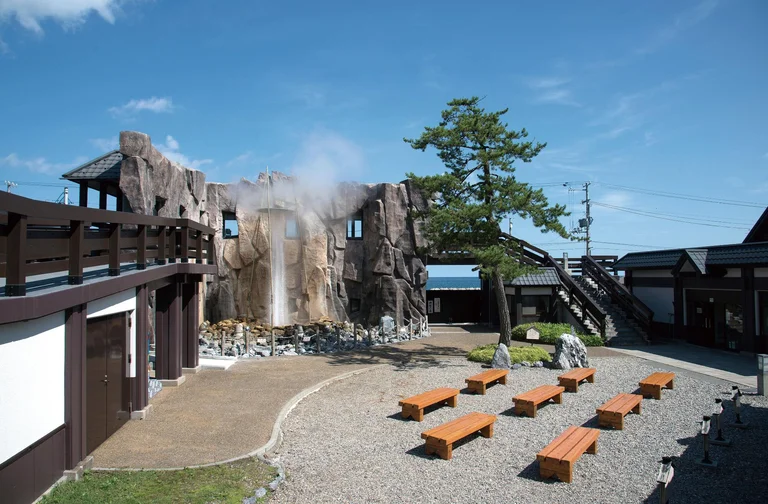
The northernmost station on this coastal journey sits in Shikabe, Hokkaido, where a volcanic curiosity erupts against the backdrop of the Pacific. The Shikabe Geyser wasn't meant to exist—it was accidentally discovered in 1924 during exploratory drilling for hot springs. What burst forth has continued unabated for a century: a natural geyser that shoots scalding 100-degree water 15 meters into the air every 10 to 15 minutes.
Japan has precious few natural geysers, making Shikabe's existence all the more remarkable. The roadside station, which opened to showcase this geothermal phenomenon, built an observation area (admission 300 yen for adults, 200 yen for children) where visitors can watch the clockwork eruptions while learning about the volcanic forces beneath.
The footbath is the station's soul: built beside the geyser observation area, it uses the same geothermal water. Soak your feet while watching the next eruption—the timing feels ritualistic, like nature keeping an appointment. The mineral-rich water leaves skin flushed and warm long after you've dried off.
At Hama no Kaasan Shokudo (Seashore Mothers' Dining Hall), local women prepare home-cooked meals using fish and shellfish from Shikabe's morning catch. The station's product center stocks fresh cod roe—a Shikabe specialty harvested from the cold Pacific waters—and seasonal seafood processed the traditional way, with salt and patience.
Visit in winter when steam from the geyser mingles with snow, creating an otherworldly scene. The station draws roughly 2.4 million visitors annually, but early mornings remain quiet, offering the best time to experience the geyser and footbath without crowds.
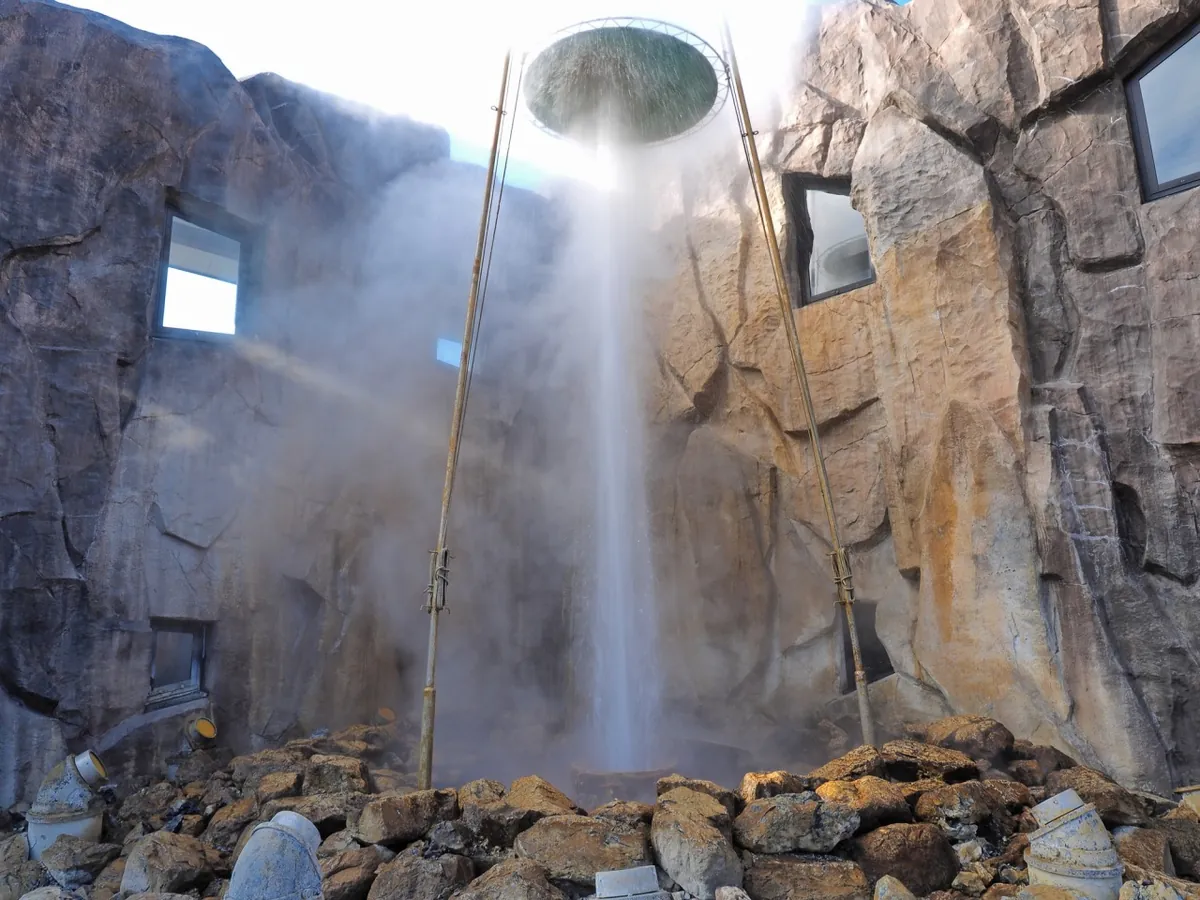
Visitors soak their feet in the geothermal footbath while watching the clockwork eruptions
2. Sansan Minamisanriku: Stories of Resilience
道の駅 さんさん南三陸 (Michi-no-Eki Sansan Minamisanriku)
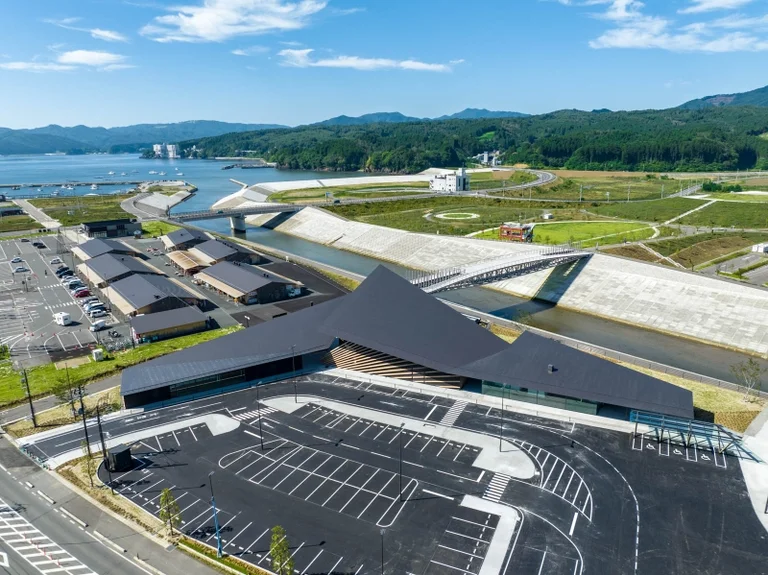
Sansan Minamisanriku
200-1 Itsukamachi, Shizugawa, Minamisanriku Town, Motoyoshi District, Miyagi Prefecture
Discover Resilience and Renewal in the Heart of South Sanriku
Four hundred kilometers south in Minamisanriku, Miyagi Prefecture, the ocean tells a different story—one of loss, memory, and radical renewal. This roadside station, which opened in 2017, integrates three distinct spaces: a bustling shopping street, a train station, and the profoundly moving South Sanriku 311 Memorial—designed by renowned architect Kengo Kuma.
The memorial houses Christian Boltanski's final work, simply titled "MEMORIAL." The French artist died in July 2021 before completing the installation, but his collaborators at Eva Albarran & Co brought his vision to life using his blueprints. The piece occupies a small, darkened room where thousands of suspended photographs—faces of Minamisanriku residents—flicker in dim light. Wind chimes tinkle softly in the background, their sound carried through speakers that mimic the ocean breeze. It's haunting and beautiful, a meditation on loss and the dignity of life.
The 2011 tsunami claimed 827 lives in Minamisanriku and destroyed approximately 70% of the town's buildings, with waves reaching heights over 15 meters. Walking through the memorial, you understand that this roadside station is more than commerce—it's a declaration of survival, a community rebuilt from rubble.
Outside, the shopping street hums with energy. The signature dish is the Kirakira Uni Don—a bowl of rice topped with fresh sea urchin from local waters, served only at the Kirakira Uni Don restaurant. Order between 11:30 AM and 2:00 PM on weekdays; it sells out by 1:30 PM.
At the Moai coloring station, visitors can paint miniature statues—a nod to the full-size Moai gifted to the town by Chile after the disaster. It's a small act of creativity, but it feels like participation in the town's ongoing story of renewal.
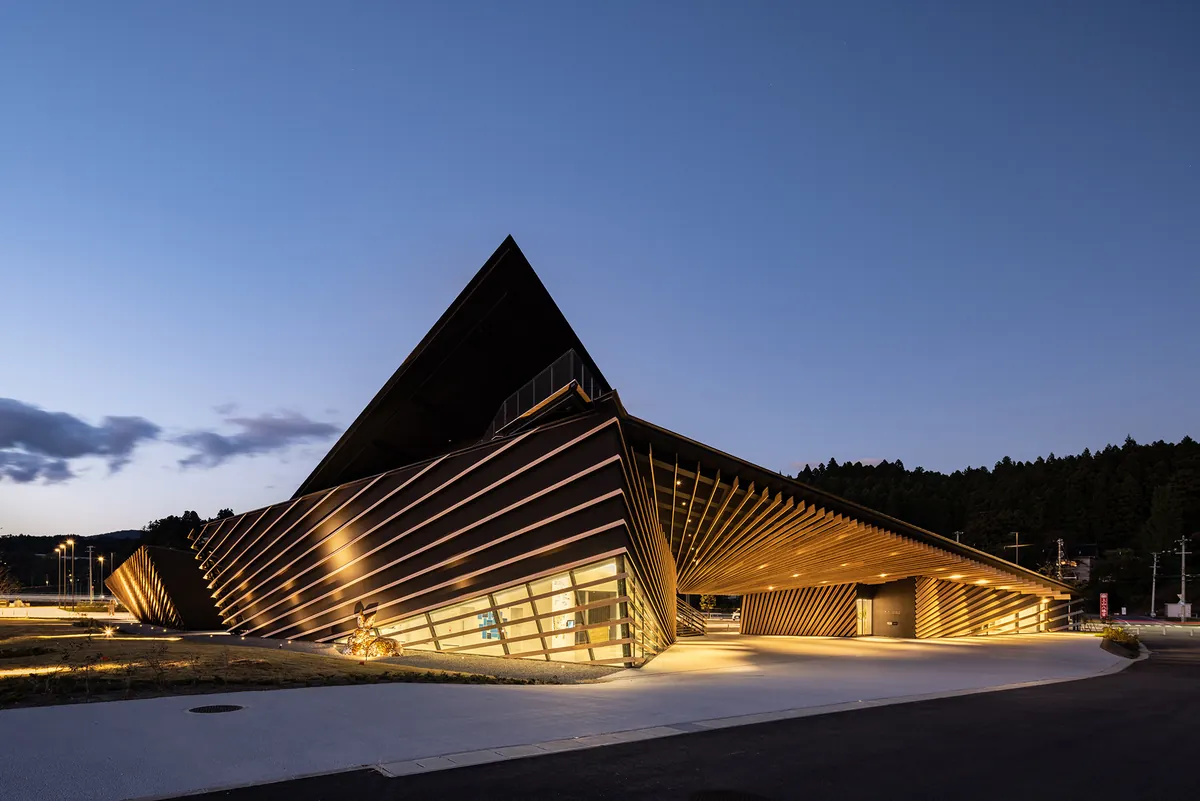
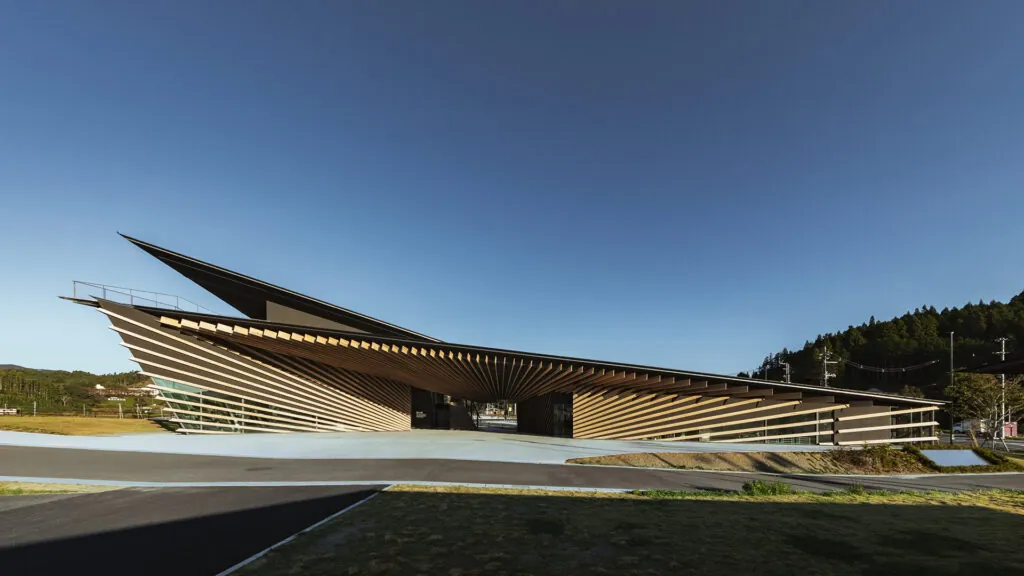
The Minamisanriku 311 Memorial designed by architect Kengo Kuma integrates the roadside station with a train station and memorial space
3. Tomiura Biwa Club: Imperial Loquats by the Sea
道の駅 とみうら枇杷倶楽部 (Michi-no-Eki Tomiura Biwa Kurabu)
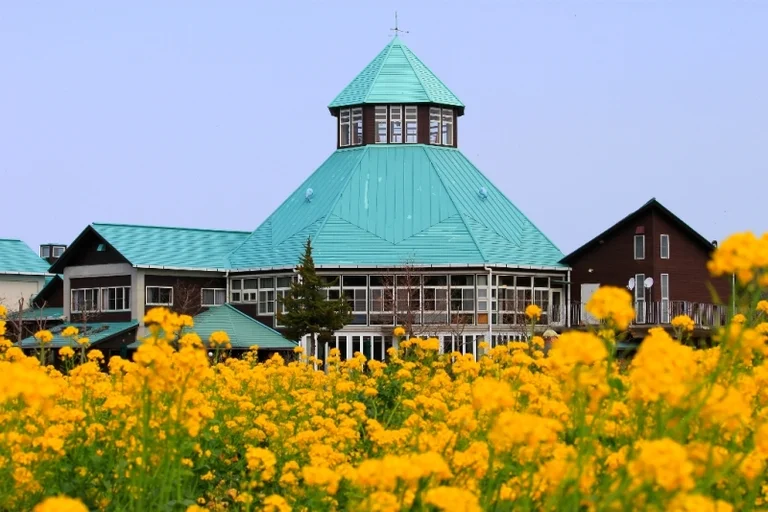
Tomiura
123-1 Aoki, Tomiura-cho, Minami-Boso City, Chiba Prefecture
Discover the Heart of South Boso’s Agricultural Charm
The Pacific coastline curves southwest into Chiba Prefecture, where Tomiura produces the second-largest loquat harvest in Japan. The roadside station here—Tomiura Biwa Club—celebrates this golden fruit with near-religious devotion. Established in November 1993 as Chiba's first michi-no-eki, it won the top prize in the 2000 Nationwide Michi-no-eki Grand Prix and was designated one of six "model roadside stations" nationwide in 2015.
The loquats grown in this region, called Boshu Biwa, carry a prestigious pedigree: every year since 1909, a judging committee has selected the finest Boshu Biwa to present to the Imperial Household. This tradition continues unbroken for over a century, testament to the fruit's exceptional quality.
Visit during late May to mid-June for loquat picking season, when orchards open their gates to travelers. The roadside station stocks an astonishing array of loquat products: jellies, curries, ice cream, jams, and liqueurs—each one transforming the fruit's delicate sweetness into unexpected forms. The loquat curry, in particular, balances savory spices with subtle fruit notes in a way that shouldn't work but absolutely does.
The market section offers fresh seafood from nearby Tomiura Port, where fishing boats land their catch each morning. Order the grilled fish at the dining counter—mackerel or horse mackerel, depending on the day's haul—served with rice and miso soup for 850 yen.
The coastline here is gentle compared to Tohoku's rugged shores, with sandy beaches and calm waters that draw families during summer months. The station sits near Route 127, making it an ideal stop for travelers circling the Boso Peninsula.
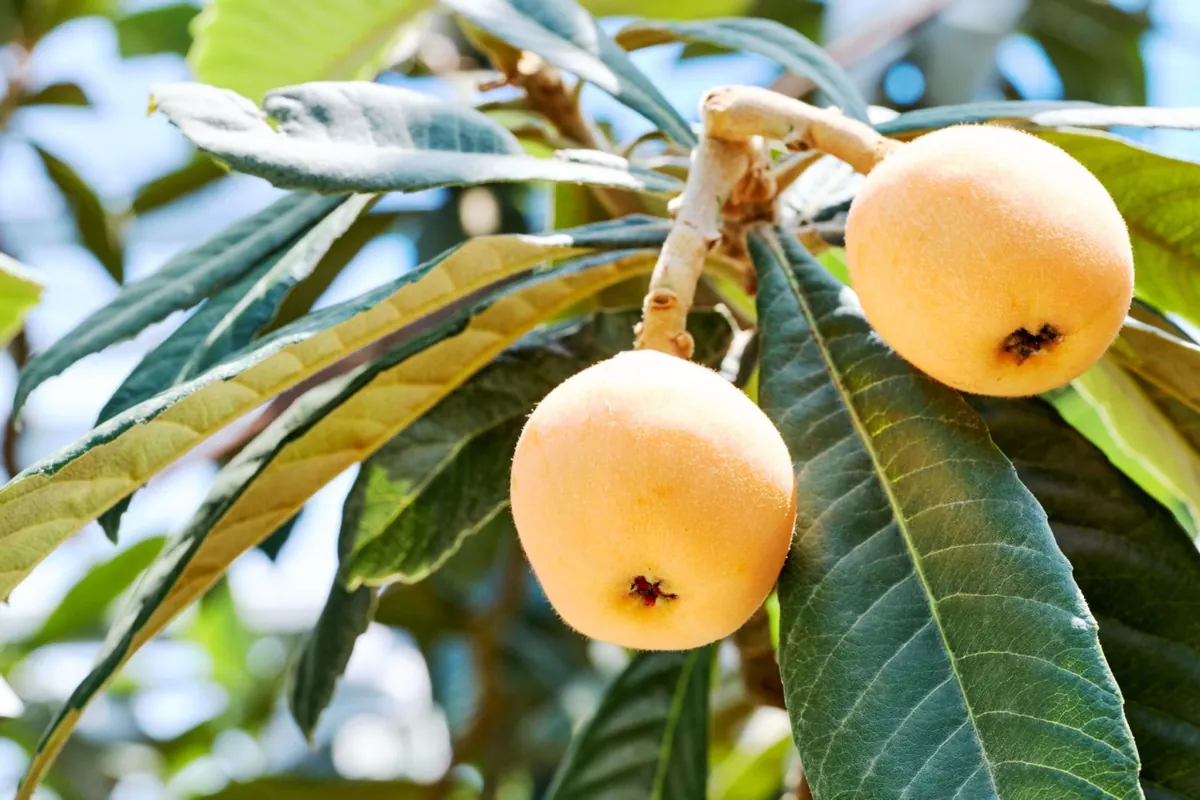
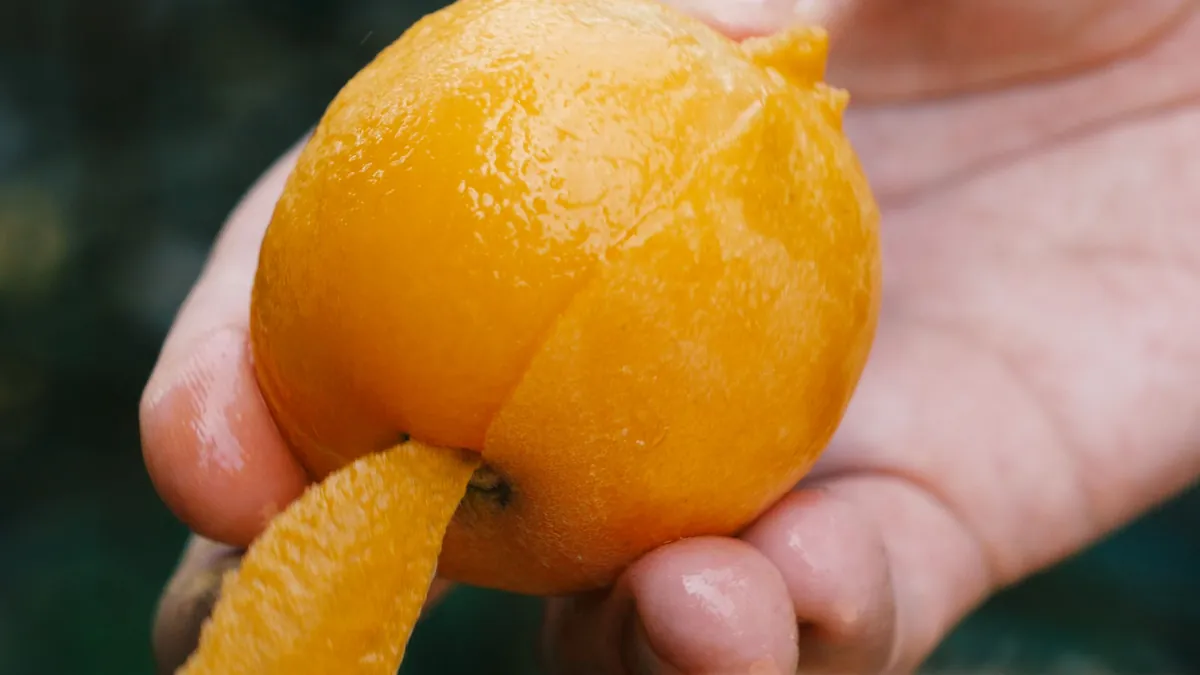
Loquat picking season from late May to mid-June when orchards open their gates to travelers
4. Ito Marine Town: Onsen by the Pacific
道の駅 伊東マリンタウン (Michi-no-Eki Itō Marine Town)
Ito Marine Town
571-19 Yugawa, Ito City, Shizuoka Prefecture
Discover the Heart of Izu at Ito Marine Town
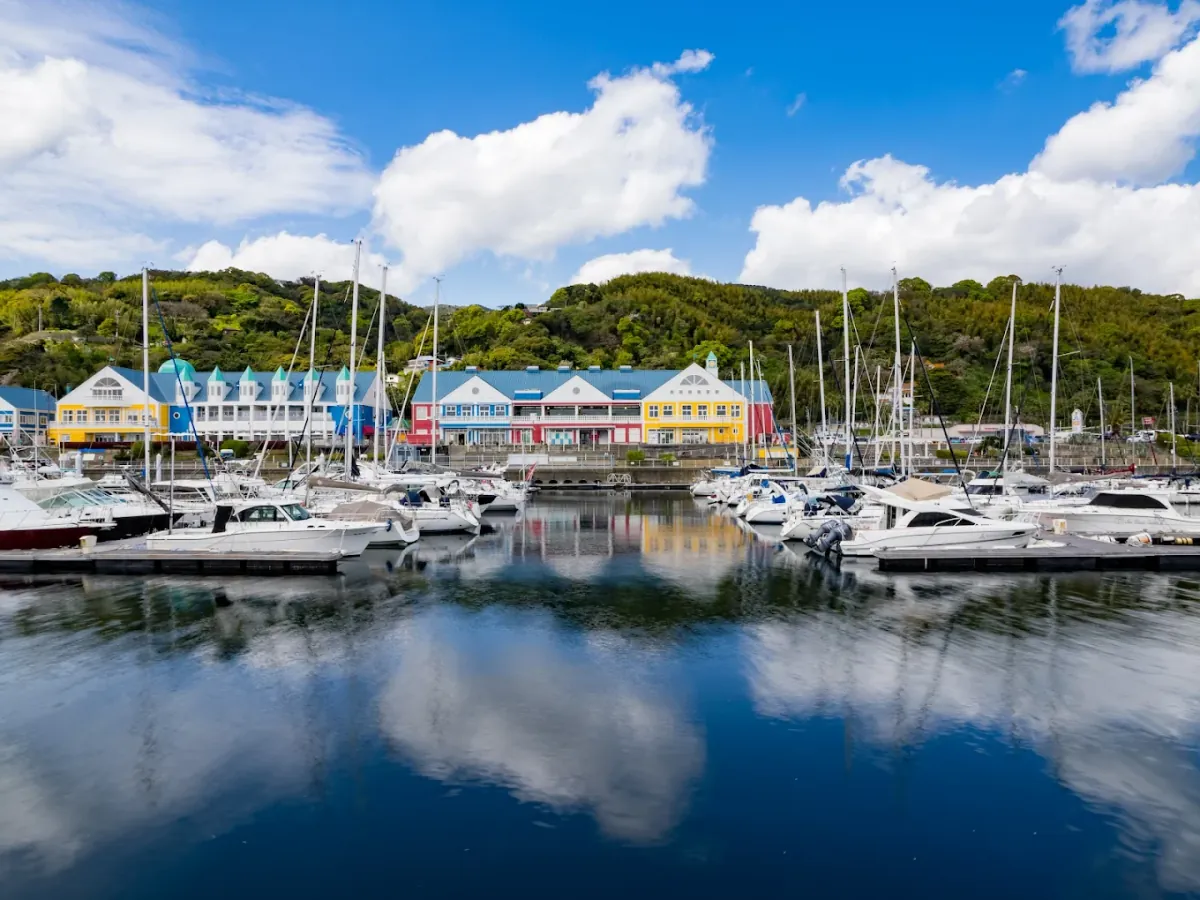
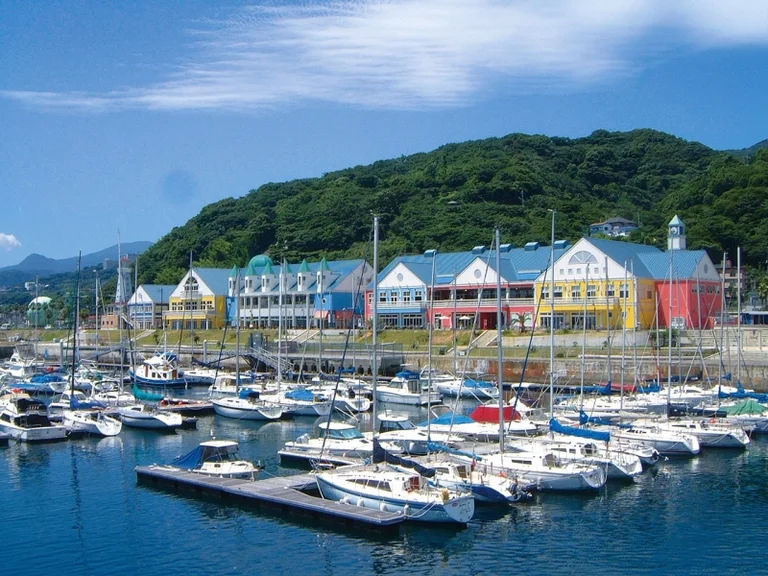
Another 200 kilometers southwest, the Izu Peninsula juts into the Pacific, its volcanic geology creating dozens of hot spring resorts along the coast. Ito Marine Town (道の駅 伊東マリンタウン) roadside station, which opened in 2001 along National Route 135, captures everything that makes this region special: fresh seafood, abundant hot springs, and sweeping ocean views.
The facility draws about 2.4 million visitors annually, and it's easy to see why. The second-floor restaurant serves kaisendon (seafood rice bowls) and sushi made with fish delivered directly from Ito Port each morning. The tuna is particularly fine—deep red, fatty, and sweet. Pair it with Izu Kogen's local beer, Amagigoe, brewed with mineral water from the peninsula's volcanic springs.
But the real draw is Asahi no Yu Seaside Spa, a day-use hot spring facility that pipes natural hot spring water from 1,000 meters underground. The large bath, open-air bath, dry sauna, and jacuzzi all use genuine onsen water—no heating or dilution. Soak in the open-air bath while watching waves roll toward shore; the salt-laced Pacific breeze mixes with sulfurous steam from the bath in a sensory combination unique to coastal onsen.
Outside, a massive footbath called Atamari~na stretches 43 meters and accommodates 70 people simultaneously. It's become a popular gathering spot where travelers rest their feet after exploring nearby attractions like Mount Omuro or Jogasaki Coast.
The bazaar building stocks Izu specialties: wasabi products (fresh wasabi grows in the peninsula's mountain streams), dried fish, and the adorably packaged Izu Kogen pudding—a custard made with local eggs and milk.
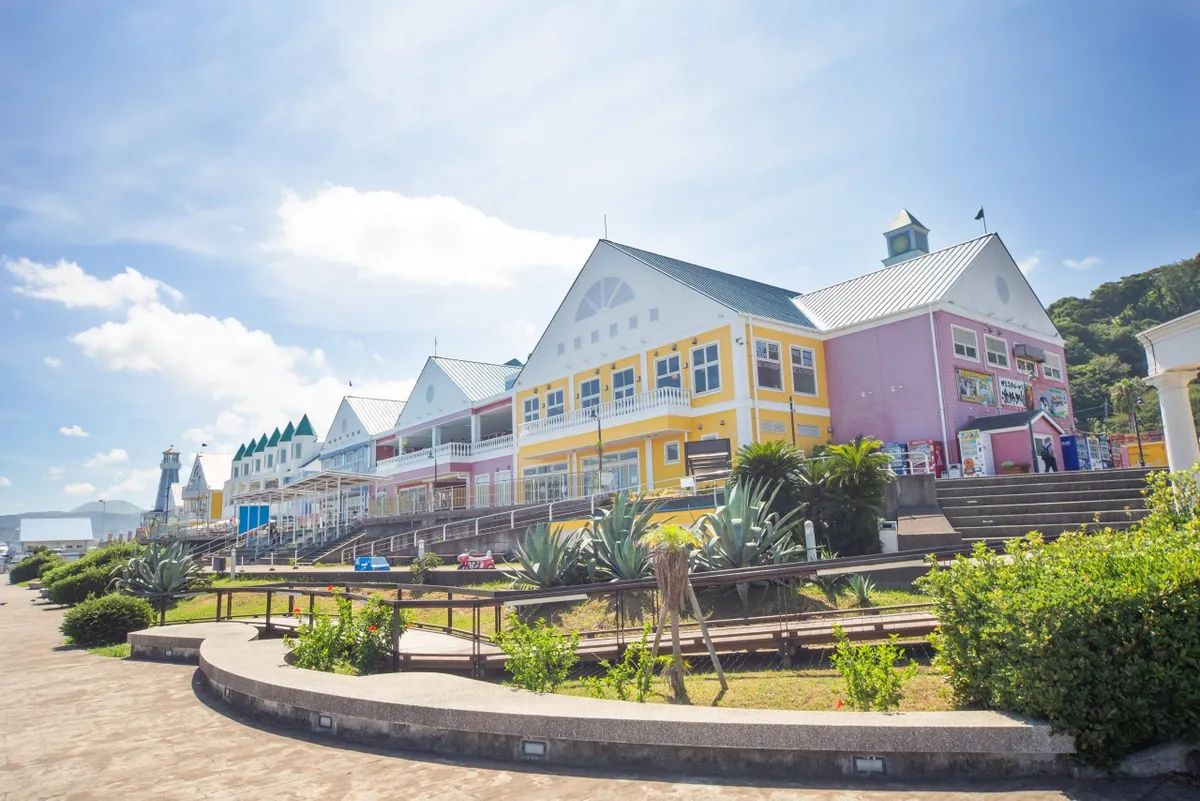
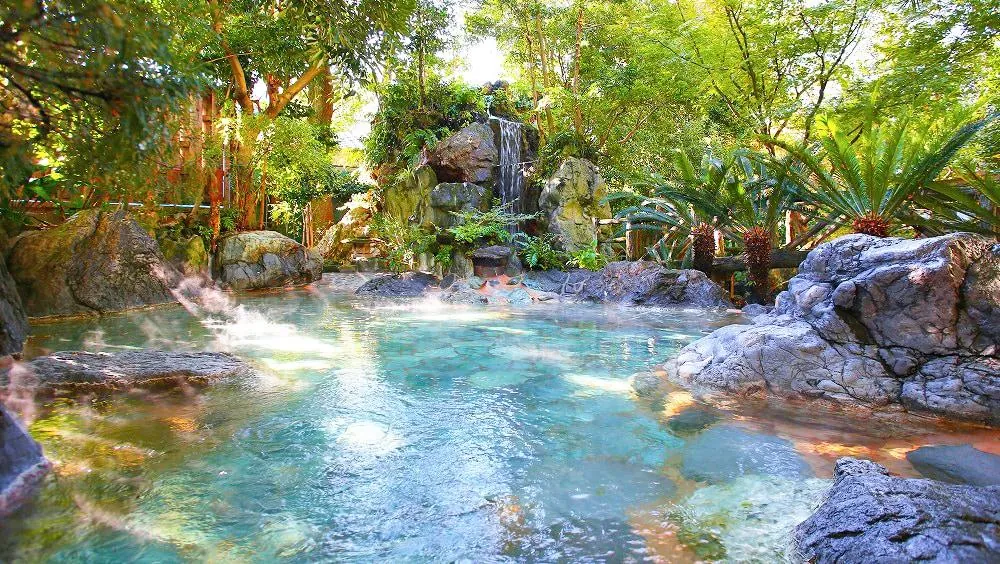
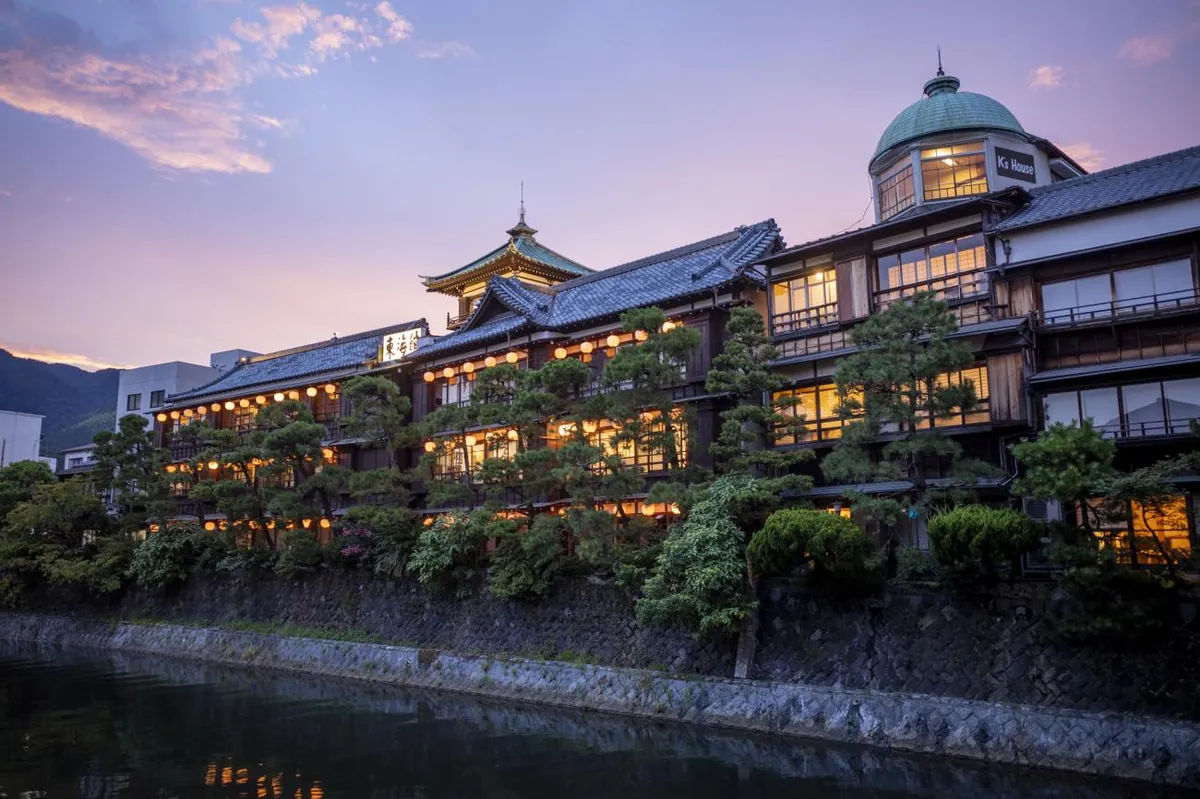
Ito Marine Town's colorful buildings face Sagami Bay along National Route 135
5. Ise-Shima: Where Divers Meet the Sacred
道の駅 伊勢志摩 (Michi-no-Eki Ise-Shima)
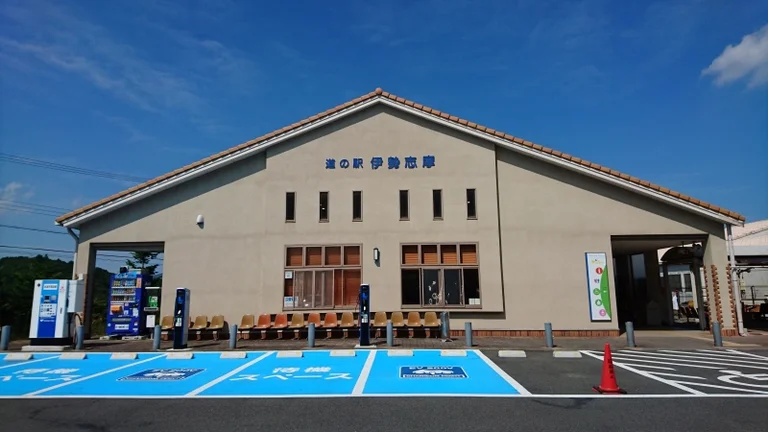
Ise-Shima
511-5 Anagawa, Isobe-cho, Shima, Mie Prefecture
Discover the Heart of Ise-Shima: Where Nature, Sea, and Culture Unite
Cross into Mie Prefecture, and the Pacific coast takes on sacred dimensions. The Ise-Shima roadside station sits within one of Japan's most storied maritime regions—home to Ise Jingu, the nation's most sacred Shinto shrine, and to Ise-Shima National Park, where ria coastlines create countless small coves and headlands across 55,000 hectares.
This area holds another treasure: about half of Japan's ama divers work these waters. These female divers collect abalone, sea urchins, and shellfish by hand, descending without breathing equipment in a tradition that stretches back over 2,000 years. Osatsu, a nearby fishing community, has the highest concentration of ama divers in Japan, and their culture is now recognized as Japan Heritage.
The roadside station markets fresh abalone, turban shells, and other delicacies harvested by ama divers. Visit the Mikimoto Pearl Island while in the area—it's here that Kokichi Mikimoto successfully cultured the world's first pearl in 1893. The calm inlets of Ise-Shima, surrounded by mountains and fed by nutrient-rich currents, create ideal conditions for pearl cultivation. Demonstrations by ama divers take place regularly at the island, offering visitors a glimpse into this ancient practice.
The station itself serves as a gateway to the region's many attractions: Ise Jingu's Inner and Outer Shrines, the Meotoiwa Rocks (wedded rocks connected by a sacred rope), and the dramatic coastline that defines Ise-Shima National Park. Stop for lunch at the station's restaurant, which serves tekone-zushi—vinegared bonito sashimi over rice, a local specialty dating back to when fishermen needed quick, portable meals.
The spiritual weight of Ise Jingu, the natural beauty of the national park, and the living tradition of ama diving converge here. It's a stretch of coast where mythology, nature, and human activity exist in delicate balance.
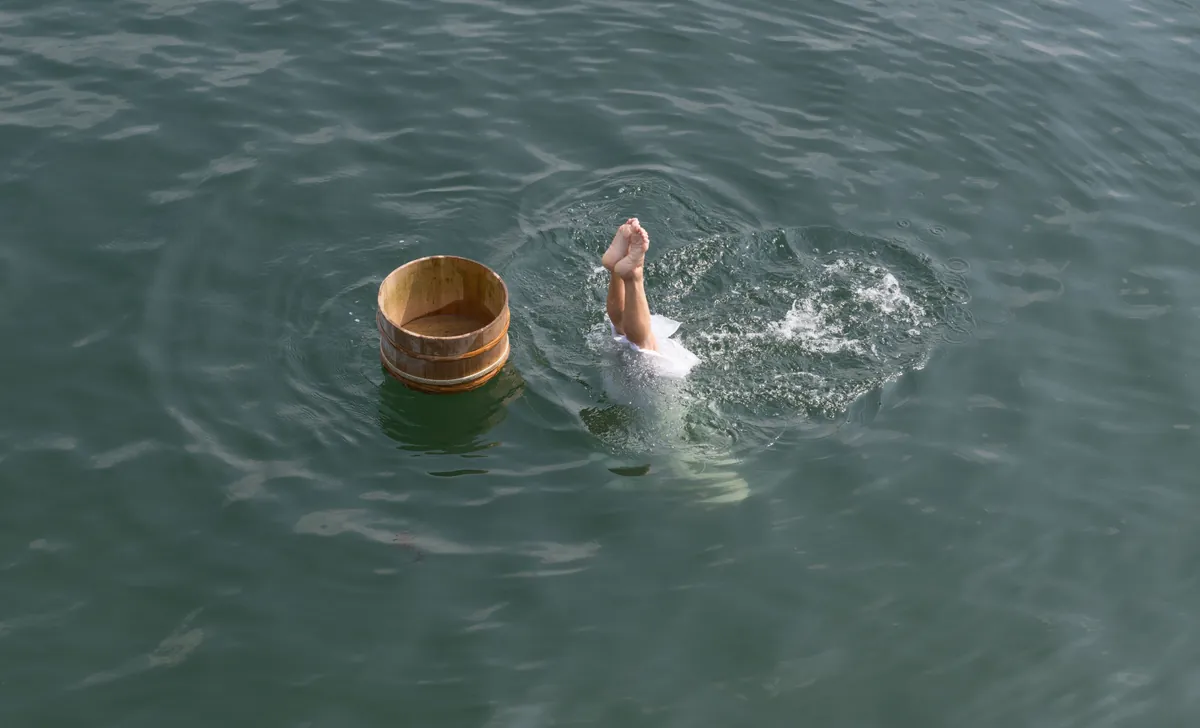
Mikimoto Pearl Island where Kokichi Mikimoto cultured the world's first pearl in 1893
6. Nakatosa: The Katsuo Capital
道の駅 なかとさ (Michi-no-Eki Nakatosa)
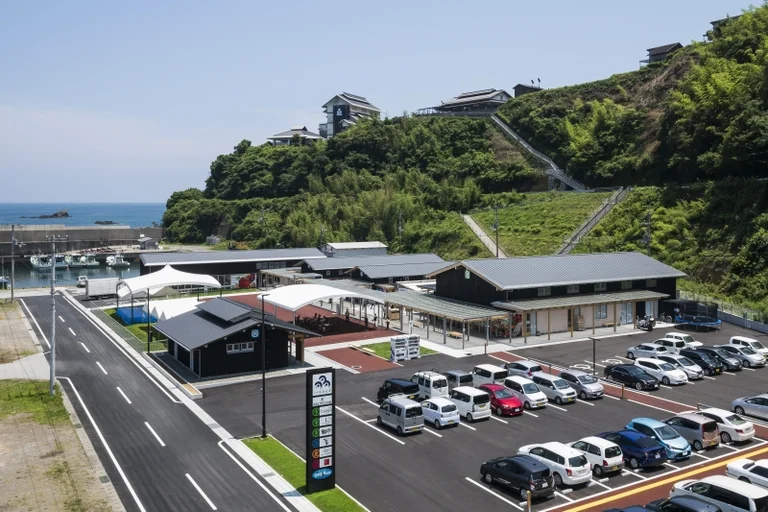
Nakatosa
8645-2 Kure, Nakitosa Town, Takaoka District, Kochi Prefecture
Savor the Spirit of Coastal Japan at Nakatosa Roadside Station
The Pacific swells crash with renewed force at Nakatosa in Kochi Prefecture, where Shikoku's southern coast faces the open ocean. This roadside station, which opened in 2017, sits in the heart of Kurei—a bustling fishing port renowned for its katsuo (skipjack tuna) caught using the traditional ipponzuri method, a pole-fishing technique preserved for nearly 400 years.
Fishermen entice schools of bonito into concentrated areas, then catch them one by one using poles rather than nets. This labor-intensive method ensures the fish arrive at market in pristine condition, their flesh firm and flavorful.
The signature preparation is katsuo no tataki—thick bonito fillets seared over flames fed by rice straw. At the Hamayaki Kaiou food stall, cooks heap straw into deep grills, set it ablaze, then thrust skewered fish into the leaping flames. The surface chars and smokes while the interior stays rare and melts on your tongue. This straw-grilled method is Kochi's soul food, and Nakatosa executes it with precision.
The dish is available from September through December during the autumn bonito run—considered the finest season for katsuo. Visit the stall between 11:00 AM and 1:00 PM to witness the preparation process and order while supplies last.
Marche Nakatosa, the on-site market, stocks seasonal seafood, handmade crafts from Kazekoubou, and regional grains from Iwamoto Komugi Ten. On Sundays between 10:30 AM and 12:30 PM, look for the limited-time Kuroshio Harbor Catch Bonito Croquettes—made with fish landed the previous day and available only during the autumn fishing season.
The Kuroshio Restaurant Ika Sendou serves fresh squid and seafood from the morning catch. Order the squid tempura (crispy fried with light batter) or squid sashimi (raw with citrus and soy). The shop operates from 10:00 AM to 6:00 PM, but the freshest offerings appear during the 11:00 AM to 1:00 PM window.
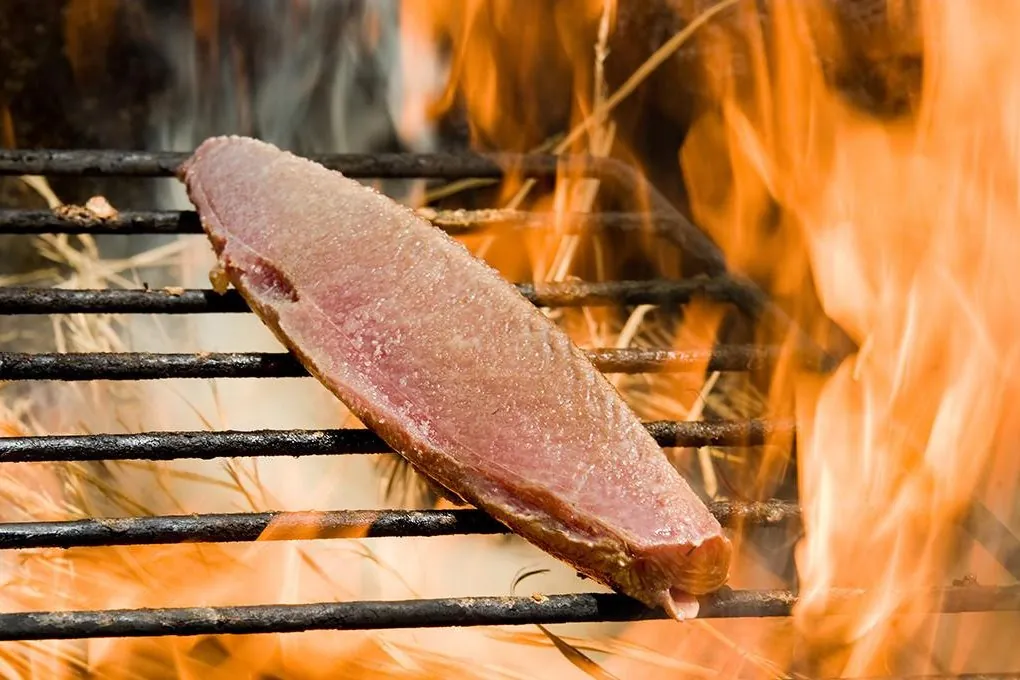
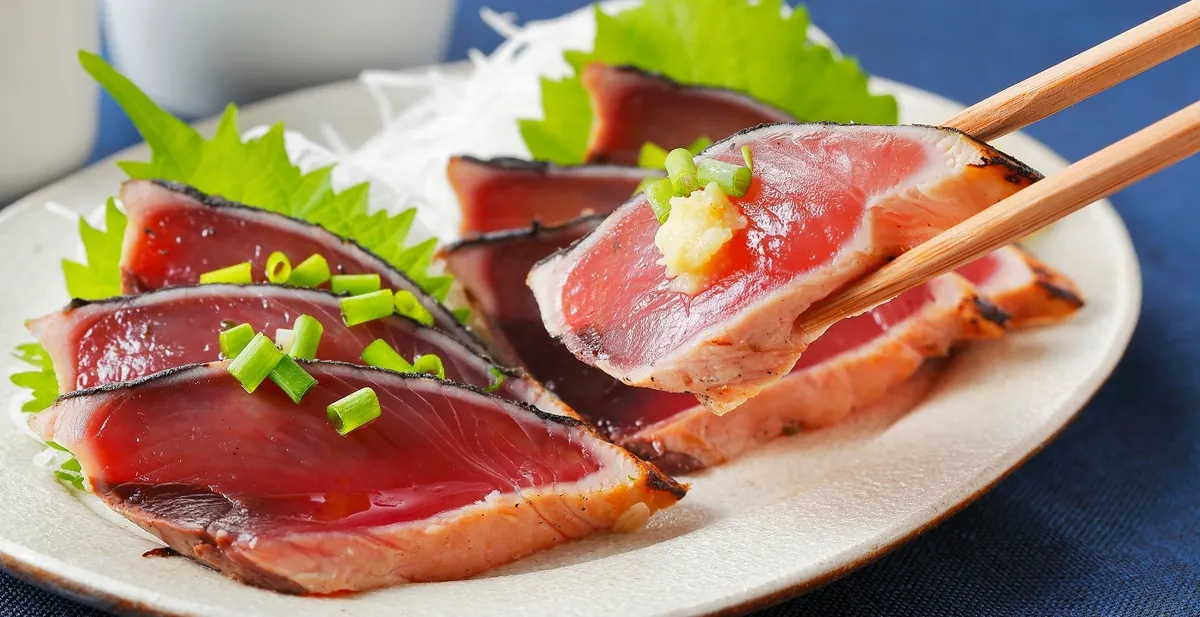
Katsuo no tataki seared over leaping straw flames that reach nearly 1000 degrees Celsius
7. Uto Marina: The Tidal Extreme
道の駅 宇土マリーナ (Michi-no-Eki Uto Marina)
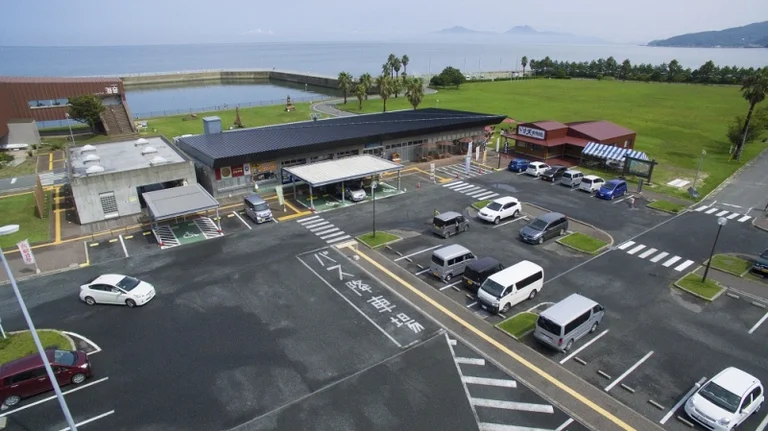
Uto Marina
3084-1 Shimaamida-cho, Uto City, Kumamoto Prefecture
Discover the Natural Beauty of Japan’s Rarest Tidal Landscapes
The final station on this Pacific coast journey sits at the edge of the Ariake Sea in Uto, Kumamoto Prefecture—where the ocean performs its most dramatic disappearing act. The Ariake Sea holds the distinction of having Japan's largest tidal range, with water levels shifting so dramatically that at low tide, the water line retreats over 2 kilometers from the coastline.
Uto Marina roadside station opened adjacent to Okoshiki Beach, a site selected among the "100 best beaches in Japan" and "100 best sunsets in Japan." At low tide, intricate sand patterns created by waves and wind spread across the exposed seabed—a natural artwork that changes with each tide cycle.
The station's restaurant serves fresh seafood from the Ariake Sea, including the popular kaisendon (seafood bowl) topped with the morning's catch. The shallow waters here nurture different species than the deeper Pacific waters further north—look for mudskippers, mantis shrimp, and various shellfish unique to tidal environments.
Sunset viewing transforms Okoshiki Beach into something transcendent. When low tide coincides with dusk—particularly from January through April—the beach turns deep orange, the wet sand reflecting the sky like a mirror. This alignment happens only a few days each year, drawing photographers from around the world. On those rare evenings, the beach becomes a pilgrimage site for anyone who loves light.
The best time to visit is late afternoon in winter or early spring, arriving two hours before sunset during a spring tide. Check the tide tables posted at the station, and plan accordingly. The walk across the exposed seabed at golden hour, with Mount Unzen visible across the water and the sky ablaze with color, ranks among the most spectacular coastal experiences in Japan.
The station itself offers bicycle rentals for exploring the coastline, and local vendors sell products made from Ariake Sea salt—harvested through traditional sun-evaporation methods and prized for its mineral complexity.
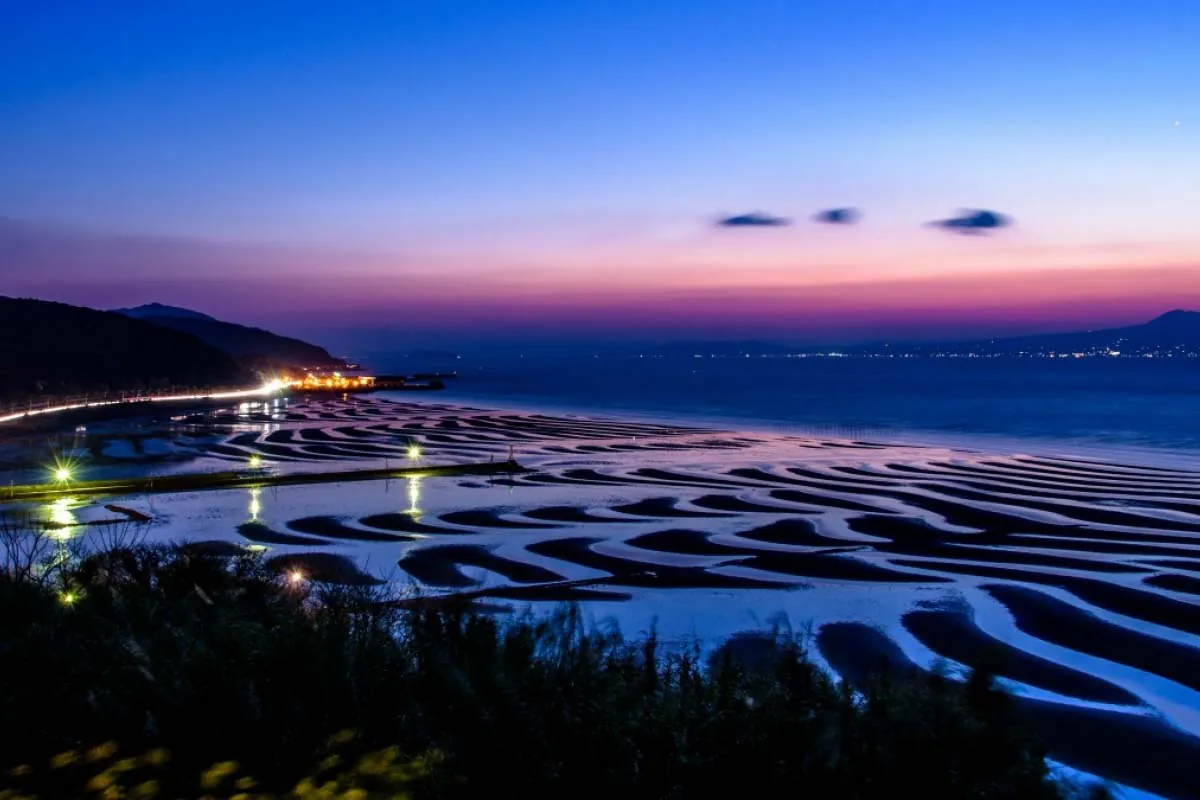
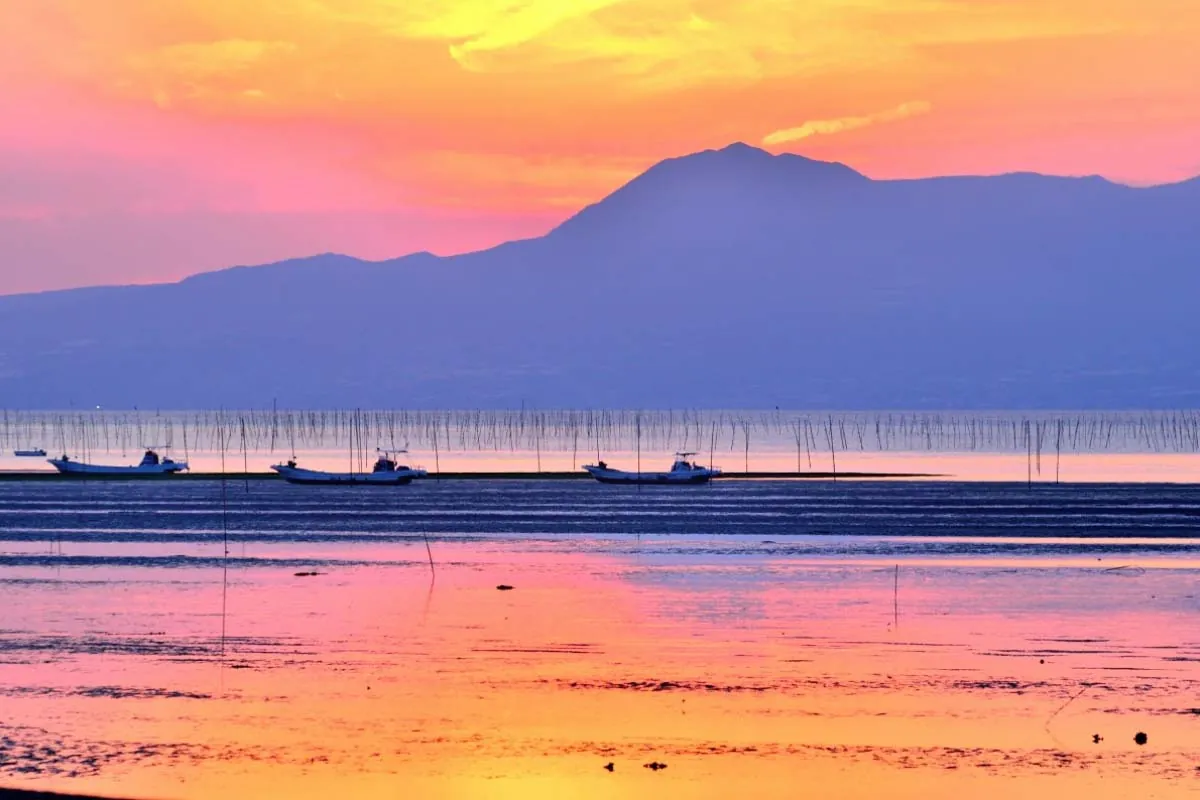
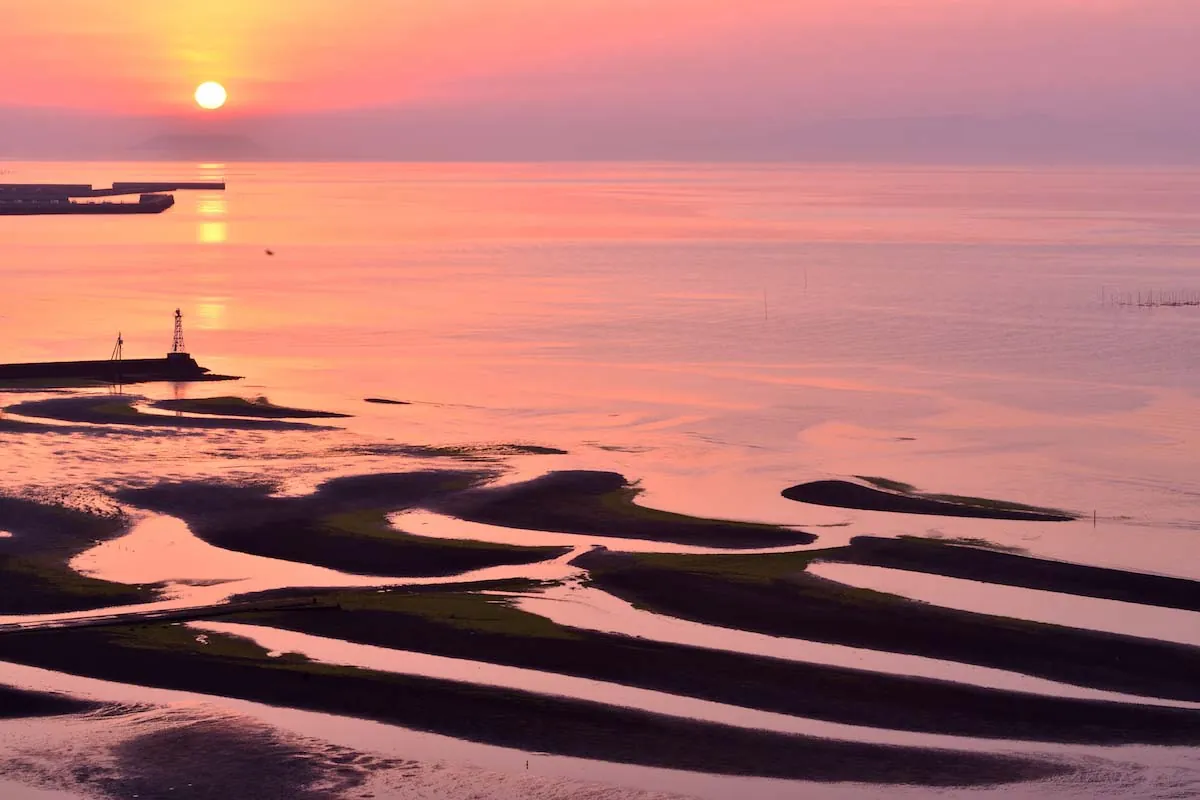
Okoshiki Beach at low tide reveals intricate sand patterns created by the Ariake Sea's dramatic tidal range
The Thread That Connects
From Hokkaido's geothermal springs to Kumamoto's tidal extremes, these seven coastal michi-no-eki tell the story of Japan's relationship with the Pacific Ocean—a relationship built on respect, adaptation, and deep knowledge of the sea's gifts and dangers.
Each station honors its coastline in a different way: through geological marvels, memorial spaces, imperial fruit traditions, hot spring culture, sacred diving practices, centuries-old fishing techniques, and the raw power of tides. They're more than rest stops—they're interpretive centers for understanding how coastal communities survive and thrive at the edge of the world's largest ocean.
Plan your own journey: This 1,500-kilometer route cannot be driven in one trip, but it can be experienced in segments. Start with Tohoku's resilient coastal towns in autumn when seafood festivals peak, explore the Izu Peninsula's onsen culture in winter, visit Mie's sacred sites during spring pilgrimages, time Kochi for the autumn bonito run, and catch Kumamoto's sunset-tide alignment in late winter.
Each station rewards early arrivals and patient exploration. Talk to vendors about the morning's catch, watch ama divers demonstrate their craft, soak in a seaside hot spring, or simply sit with a bowl of sea urchin rice and watch the Pacific do what it has done for millennia.
The coast calls. These seven roadside stations answer with open doors, fresh seafood, and stories etched in salt and stone.
Featured Stations: In-Depth Highlights
Of the 7 stations on this route, we've highlighted 7 exceptional stops that truly embody the region's unique character. Each offers unique experiences worth making time for.
Shikabe Geyser Park
18-1 Aza Shikabe, Shikabe-cho, Kayabe-gun (Onuma Park-Shikabe Line, Hokkaido Route 43)
Where Nature’s Power Meets Coastal Comfort
Sansan Minamisanriku
200-1 Itsukamachi, Shizugawa, Minamisanriku Town, Motoyoshi District, Miyagi Prefecture
Discover Resilience and Renewal in the Heart of South Sanriku
Tomiura
123-1 Aoki, Tomiura-cho, Minami-Boso City, Chiba Prefecture
Discover the Heart of South Boso’s Agricultural Charm
Ito Marine Town
571-19 Yugawa, Ito City, Shizuoka Prefecture
Discover the Heart of Izu at Ito Marine Town
Ise-Shima
511-5 Anagawa, Isobe-cho, Shima, Mie Prefecture
Discover the Heart of Ise-Shima: Where Nature, Sea, and Culture Unite
Nakatosa
8645-2 Kure, Nakitosa Town, Takaoka District, Kochi Prefecture
Savor the Spirit of Coastal Japan at Nakatosa Roadside Station
Uto Marina
3084-1 Shimaamida-cho, Uto City, Kumamoto Prefecture
Discover the Natural Beauty of Japan’s Rarest Tidal Landscapes
Jessica Muller
European travel writer based in Japan for the past four years. Explores rural communities and regional culture across the country, bringing authentic stories of local life to Western readers.