
I wasn't prepared for what I found. Stepping out of the bus in Minakami Town, I expected a roadside station—maybe a farmers market and a parking lot. Instead, I found myself at the entrance to an entire village, one where the air smelled of buckwheat flour and wood shavings, where elderly artisans demonstrated skills passed down through centuries, and where rice paddies stretched toward snow-capped mountains in every direction.
Takumi no Sato (たくみの里) isn't a roadside station in any conventional sense. It's a 330-hectare living museum—roughly 70 Tokyo Domes worth of traditional Japanese countryside—where more than 23 craft workshops invite visitors to step inside centuries-old farmhouses and try their hand at everything from soba noodle making to indigo dyeing. This is the theme park Japan never needed to build: authentic, unhurried, and entirely real.
Takumi no Sato Craft Village
A sprawling 330-hectare artisan village in Minakami, Gunma, where traditional workshops, orchards, and mountain scenery create an immersive cultural experience
A Village Reborn from History
The Mikuni Kaido Connection
Long before Takumi no Sato existed as a tourist destination, this valley served as a crucial stopover on the Mikuni Kaido, an ancient highway connecting present-day Takasaki to Nagaoka across the mountains. During the Edo period (1603-1868), daimyō lords and their retinues traveled this route as part of the sankin-kōtai system, which required lords to spend alternating years in the capital. The village here—known as Sukawa-shuku—prospered as a staging post, offering lodging, food, and supplies to weary travelers.
Walking through Takumi no Sato's main street today, you can still see echoes of that heritage:
- Traditional kura (storehouses) with thick white walls
- Large Edo-era farmhouses converted into workshops
- An irrigation canal flowing past rustic cafes
- A working water wheel turning beside the road
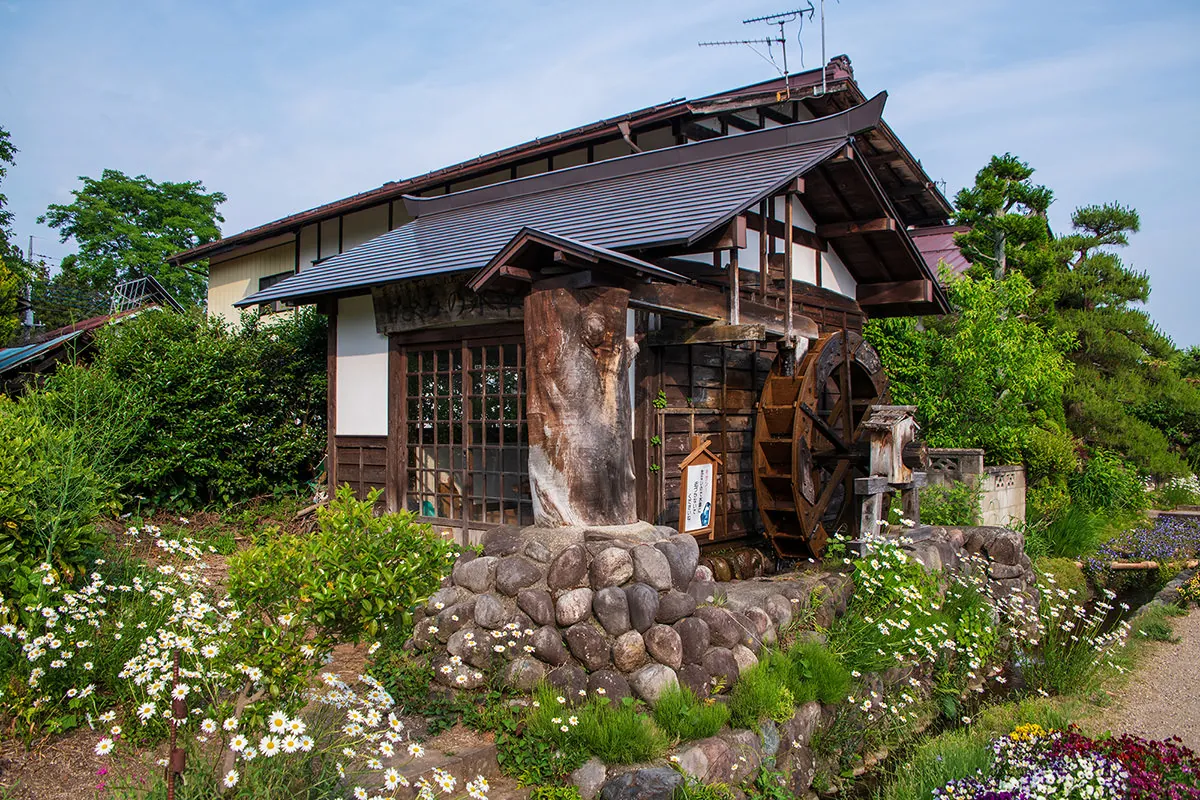
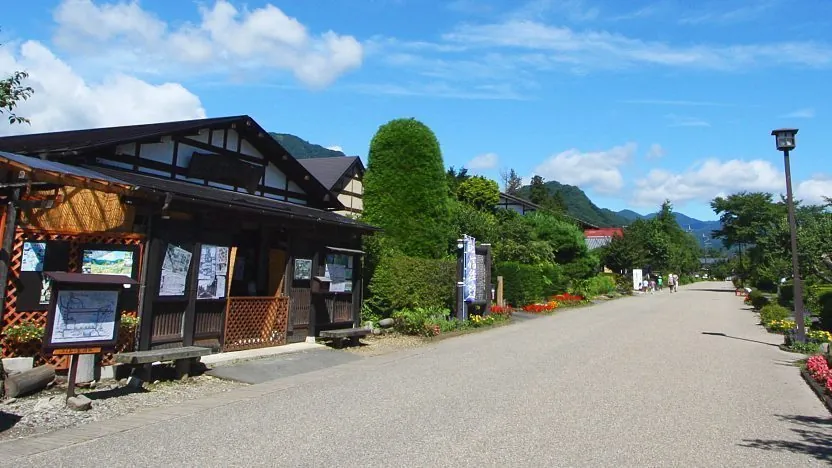
Traditional kura storehouses along Takumi no Sato's main street
The Silk Legacy
This region carries a 600-year history of silk cultivation. Gunma Prefecture became the heart of Japan's silk industry, culminating in the opening of the Tomioka Silk Mill in 1872—now a UNESCO World Heritage Site. By 1909, Japan had become the world's largest exporter of raw silk, with Gunma producing around 40% of the country's cocoons. That heritage remains visible at Takumi no Sato, where you can still create crafts using silk fibers and silkworm cocoons at several workshops.
A Village Officer's Vision
But by the late 20th century, Sukawa's prosperity had faded. The construction of the Shin'etsu rail line in 1902 drew traffic away from the old highway, and the village slowly emptied. Then came Susumu Kawai.
A village officer with a deep love for his community's heritage, Kawai saw what others had overlooked: the culture, history, and impeccable natural scenery that made this place special. Between 1985 and 1987, he opened five craft workshops in restored traditional buildings, calling the project "Takumi no Ie" (Artisan's House).
The concept was simple but revolutionary: invite visitors not just to observe traditional crafts, but to experience them firsthand. One workshop became five, five became ten, and today more than 23 artisan studios dot the village landscape. In 2005, the area was officially registered as a michi-no-eki—though calling it a "roadside station" is like calling Kyoto "a place with some temples."
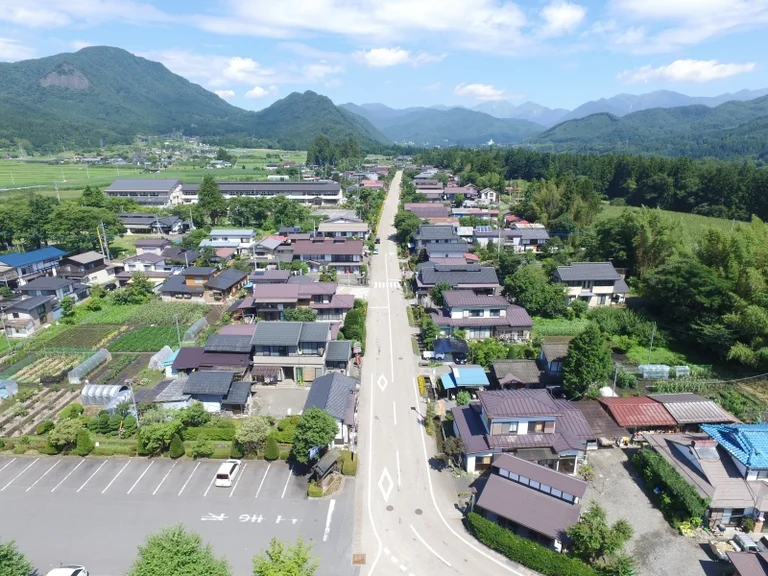
Takumi no Sato
847 Sugawa, Minakami Town, Tone District, Gunma
Where Tradition Meets Taste in the Heart of Nature
The Workshops: Where Craft Becomes Experience
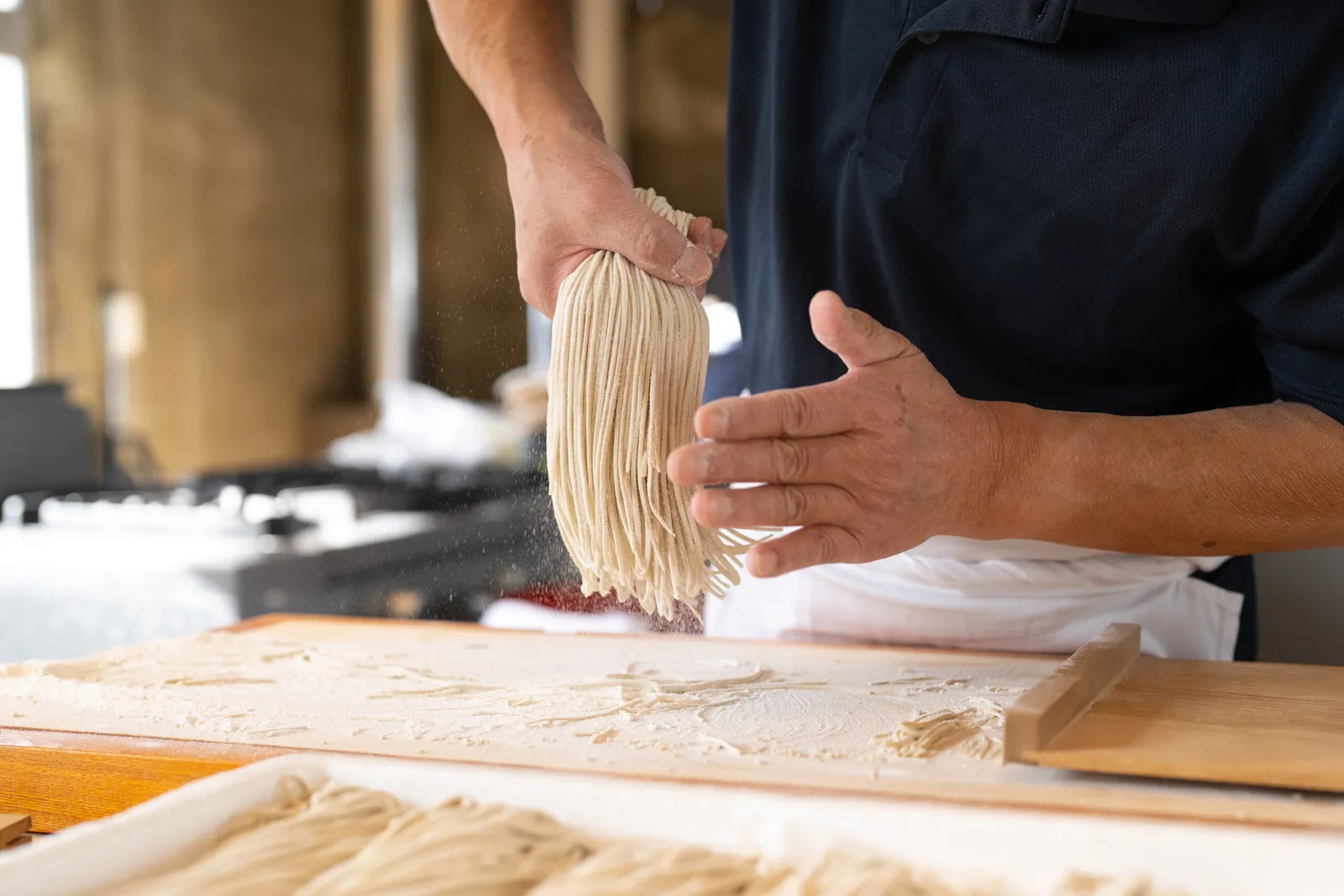
Soba Noodle Making
Every journey through Takumi no Sato should begin where mine did: in a workshop that smells of stone-ground buckwheat. Soba making is perhaps the village's most popular experience, and for good reason. Under the patient guidance of local instructors, you'll learn to:
- Mix buckwheat flour with water to the perfect consistency
- Knead the dough until smooth and elastic
- Roll it thin using traditional techniques
- Cut uniform noodles with a heavy knife and steady hand
The entire process takes about 60 minutes, and the reward is immediate: you eat what you've made, served with seasonal vegetables and a bowl of steaming miso soup. At around ¥1,000-1,400 per person, it's among the best cultural experiences you can buy in Japan.
Washi Paper Making
In another farmhouse, I slid my hands into cold water and felt something transformative. Washi papermaking—the art of creating Japanese paper from kozo (mulberry) fibers—has been practiced for over a thousand years. At Takumi no Sato, you learn the fundamentals:
- Suspending fibers in a watery slurry
- Scooping them onto a bamboo screen
- Shaking and tilting to create an even sheet
- Pressing and drying your creation
You can decorate your paper with pressed leaves and flower petals, creating something entirely unique. The finished sheet—smooth, surprisingly strong, with a texture unlike any machine-made paper—becomes a souvenir you'll never want to throw away.
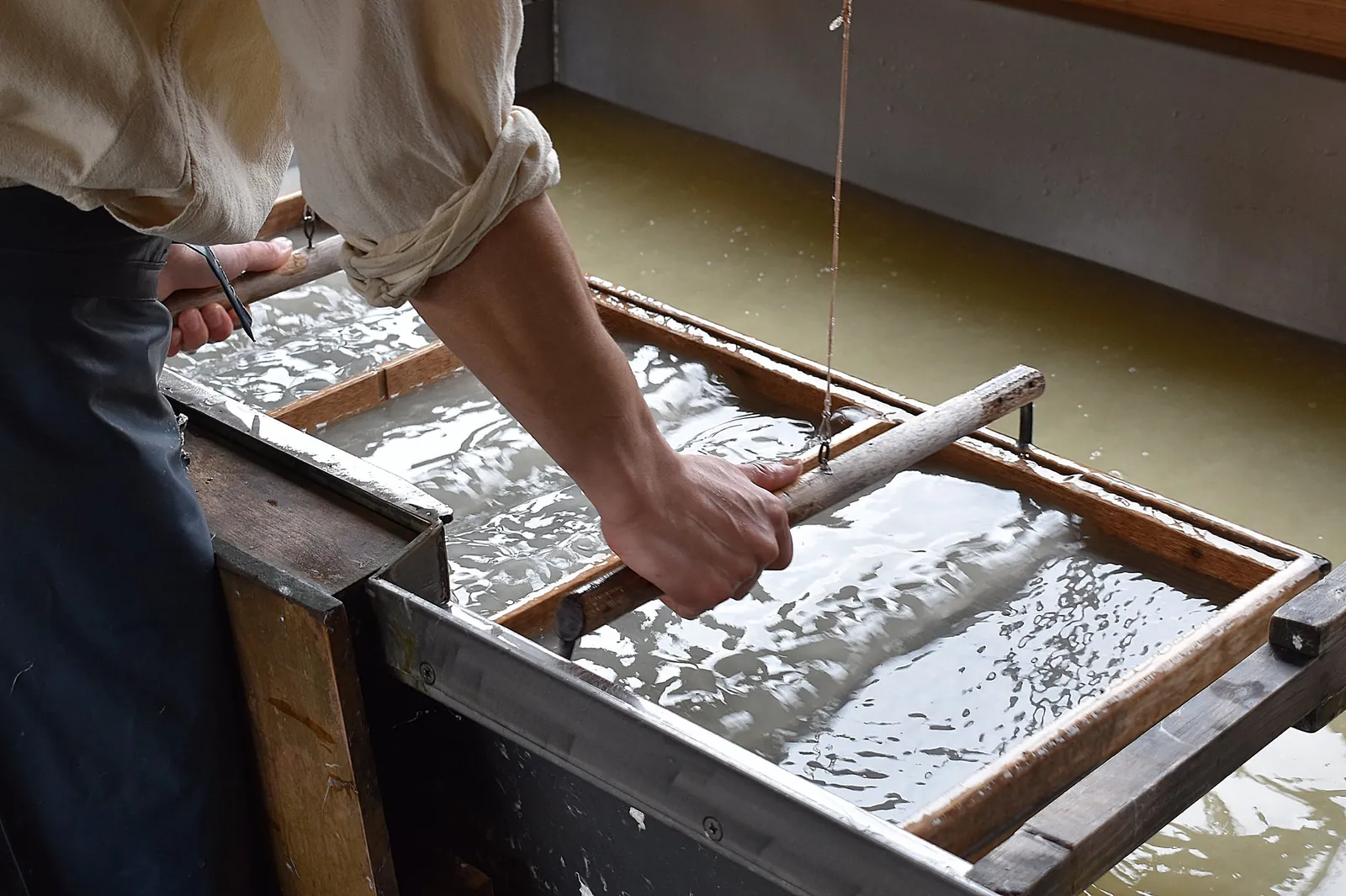
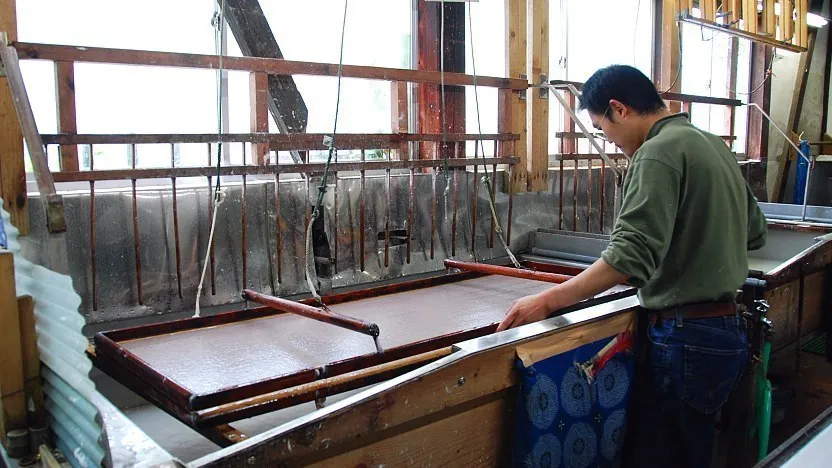
Traditional washi paper making process
Indigo Dyeing and Weaving
The aizome (indigo dyeing) workshop captivated me with its simplicity. You choose a white cloth—a handkerchief, a bandana, a small bag—and learn the art of shibori, the Japanese tie-dye technique. Fold, pinch, bind with string or rubber bands, then submerge your creation in vats of natural indigo dye.
The magic happens when you unwrap. Every piece emerges unique, with patterns ranging from delicate geometric designs to bold abstract swirls. The deep indigo color, derived from the ai plant, has been used in Japan for centuries—it was once believed to repel insects and snakes, making it practical as well as beautiful.
At the weaving workshop, you can combine wood fibers with silk to create kiori fabric, a regional specialty used for bags and accessories. The rhythmic clack of the loom becomes meditative, a reminder that patience and repetition are the foundations of all craftsmanship.

Traditional shibori indigo dyeing patterns
Beyond the Big Three
The workshops continue in every direction:
- Bamboo weaving: Create baskets using techniques unchanged for generations
- Lacquerware: Learn the basics of urushi coating
- Glass etching and blowing: Modern crafts with artistic results
- Pottery and ceramics: Throw a bowl on a wheel
- Mask painting: Decorate traditional daruma or Noh-style masks
- Straw crafts: Weave rice straw into functional objects
- Silkworm cocoon crafts: Transform cocoons into decorative animals
- Silverwork and jewelry: Forge simple rings and pendants
- Traditional Japanese doll making: Stitch together fabric figures
- Fragrance crafting: Blend your own Japanese incense
Most workshops cost between ¥500 and ¥1,500 and take 30-90 minutes to complete. No reservations are necessary for most activities—just show up, point at what interests you, and learn.
Tasting the Village
Local Flavors at Every Turn
Between workshops, hunger inevitably arrives—and Takumi no Sato delivers. Small restaurants and cafes hide inside converted farmhouses, serving meals that reflect the region's agricultural heritage.
The soba here is exceptional, made from locally milled buckwheat flour and served cold with dipping sauce or hot in steaming broth. Konnyaku (yam cake) is a regional specialty—low-calorie, with a distinctive jelly-like texture—and you can even make it yourself at one of the workshops before eating your creation.
Don't Miss:
- Tohaku Miso: Premium miso made with domestically grown soybeans and rice koji from a farm that won gold at the National Rice Contest
- Mogitore Gelato: Handcrafted in small batches using fresh local milk and seasonal fruits; the strawberry-milk flavor is legendary
- Local Yogurt: From the village's own dairy workshop, with a richness that supermarket brands can't match
- Fresh Produce: Seasonal vegetables, mountain herbs, and handcrafted jams fill the farmers market
Seasonal Fruit Picking
Takumi no Sato's orchards offer year-round picking experiences:
| Season | Fruit |
|---|---|
| January-June | Strawberries (especially the prized Yayoihime variety) |
| June-July | Cherries |
| July-August | Blueberries |
| September-November | Apples (including Gunma Meigetsu, known for mellow sweetness) |
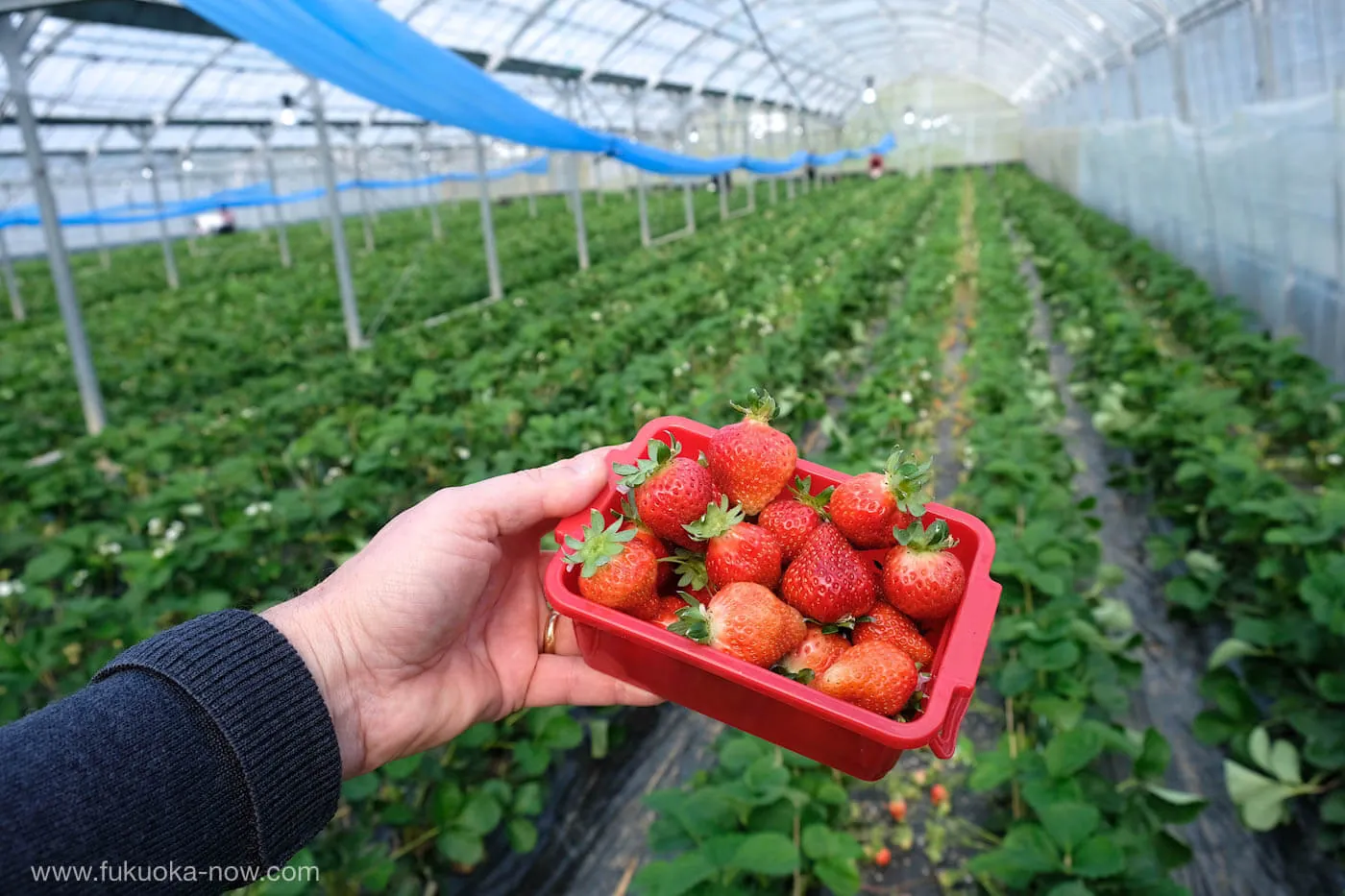
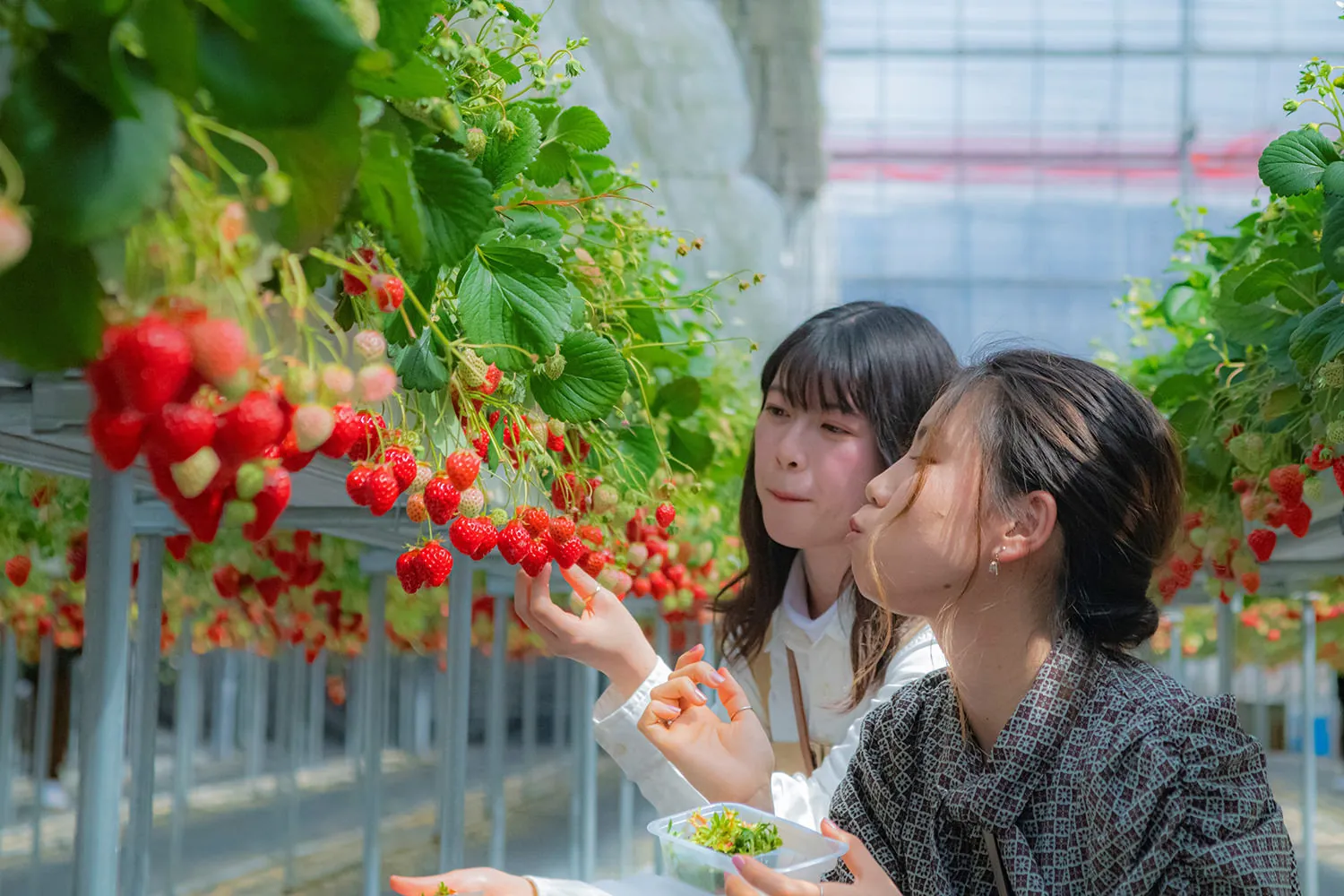
Strawberry picking at Takuminosato
The Takuminosato Strawberry House is particularly popular, offering not just picking but smoothie-making workshops and ichigo daifuku (strawberry mochi) experiences. Arrive early on weekends—the best berries go fast.
Exploring the Landscape
Rent a Bicycle
Takumi no Sato sprawls across four interconnected villages, and the best way to explore is on two wheels. The Information Center near the main parking lot rents both regular and electric-assist bicycles from 9:00 AM to 5:00 PM. Electric bikes make the gentle hills effortless and extend your range to the outer reaches of the village, where you'll find the most secluded workshops and the best mountain views.
The Wild Buddha Trail
My favorite discovery was the Nobotoke Pilgrimage, a scavenger hunt for nine traditional stone statues (nobotoke) scattered across the village. Grab a map from the Information Center and set off on foot or by bike to find each weather-worn Buddha, hidden beside rice paddies, under ancient trees, and at the edges of forgotten shrines.
Complete the full circuit and return to Tainin-ji Temple to receive a commemorative gift. The trail typically takes about two hours on foot—longer if you stop to appreciate the silence and the scenery, which you absolutely should.
What You'll See
The landscape itself is worth the journey:
- Rice paddies reflecting the sky in spring and early summer
- Apple orchards heavy with fruit in autumn
- Mountain peaks dusted with snow from late fall through spring
- Traditional farmhouses with thatched roofs still in use
- Irrigation canals where clear water rushes past ancient stones
This is satoyama Japan—the countryside between mountains and lowlands where people have farmed and lived in harmony with nature for centuries. It's increasingly rare to find places where this landscape survives intact, unspoiled by concrete and convenience stores. Takumi no Sato is one of them.
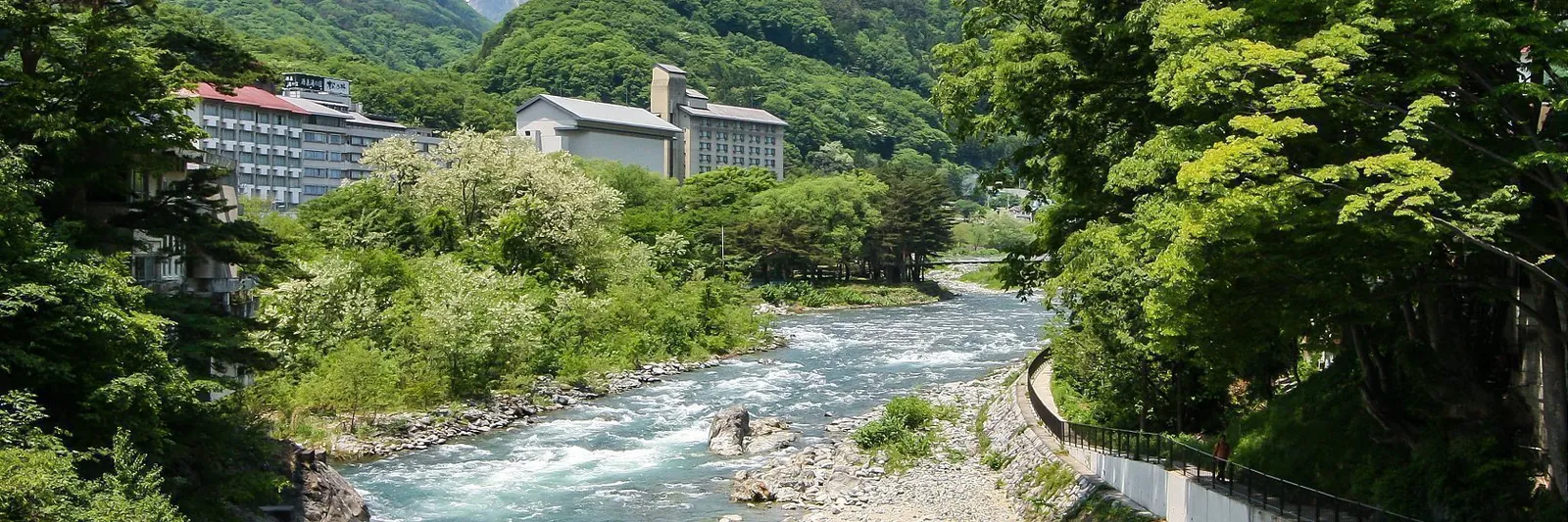
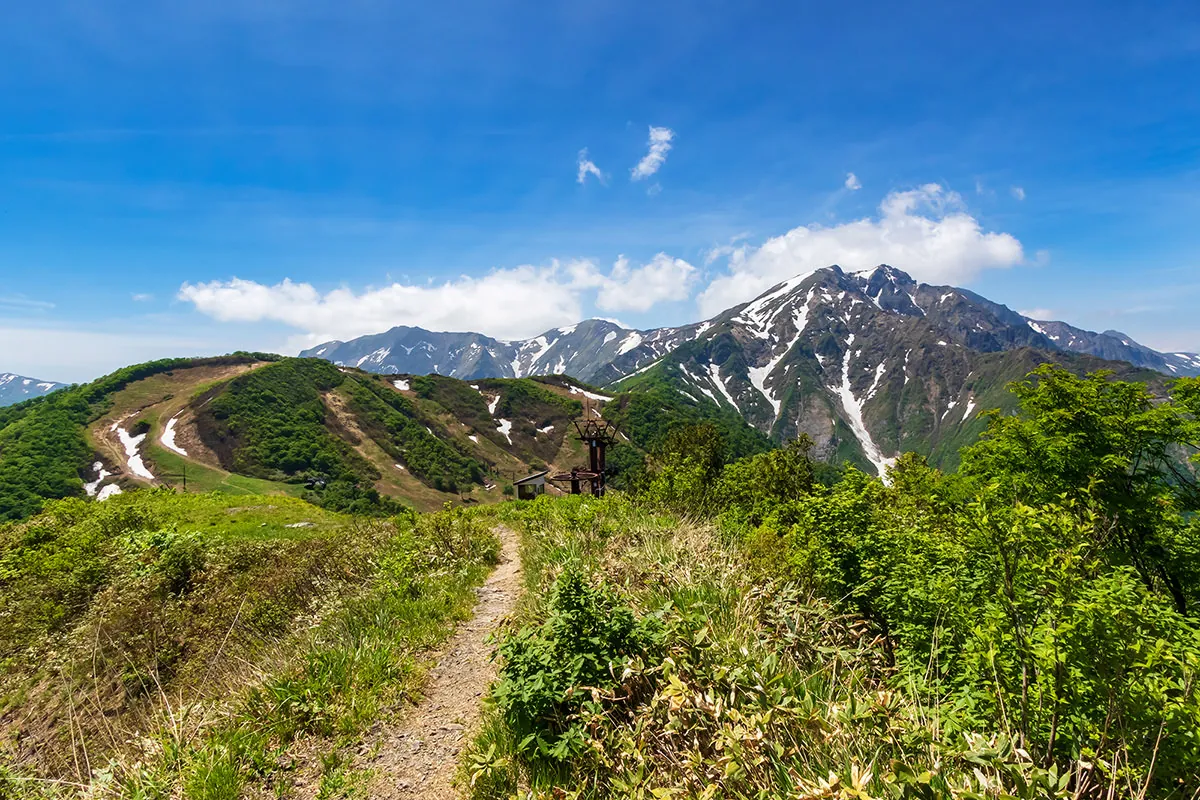
Scenic mountain landscape in Minakami
Completing the Experience: Nearby Onsen
No trip to the Minakami area is complete without soaking in a hot spring. The region is famous for its thermal waters, and several legendary onsen lie within easy reach of Takumi no Sato.
Sarugakyo Onsen (15 minutes by car)
The closest option, located near Lake Akaya. Multiple ryokan offer day-use bathing, and the waters are said to smooth the skin.
Takaragawa Onsen (30 minutes by car)
Home to some of Japan's largest and most famous rotenburo (outdoor baths). The main bath, Kodokara, can accommodate 200 people and measures over 300 square meters. Three of the four outdoor baths are mixed-gender—unusual and liberating.
Hoshi Onsen (35 minutes by car)
One of Japan's designated "Secret Hot Springs" (hito), isolated deep in the mountains. The sole ryokan, Chojukan, features a rustic wooden indoor bath where mineral water bubbles directly up through the stone floor. It's as close to bathing in a natural spring as you can get.
After a day of crafting, eating, and exploring, there's nothing quite like lowering yourself into steaming, mineral-rich water as the mountains turn pink with sunset.
Planning Your Visit
Getting There
From Tokyo Station, take the Joetsu Shinkansen to Jomo-Kogen Station (approximately 75 minutes, covered by JR Pass). From Jomo-Kogen, buses run to Takumi no Sato about every 1-2 hours:
- Travel time: 20-25 minutes
- Cost: ¥730-850 one way
- Bus line: Numata-Sarugakyo Line
By car, take the Tsukiyono IC exit from the Kan-Etsu Expressway (about 20 minutes from the interchange).
Practical Information
| Detail | Information |
|---|---|
| Hours | 9:00 AM - 5:00 PM (until 4:00 PM November-March) |
| Closed | Varies by workshop; most close one weekday and New Year holidays |
| Admission | Free to enter village; workshops ¥500-1,500 each |
| Parking | 160 regular spaces, 14 large vehicle spaces, 3 accessible spaces |
| Facilities | Restaurant, café, farmers market, restrooms, EV charging, free Wi-Fi |
| Contact | +81 278-64-2210 |
Tips for the Best Experience
- Arrive early: The best produce at the farmers market and the quietest workshop experiences happen before 10:00 AM
- Get the English map: Available at the Information Center near the main parking lot
- Allow 3-4 hours minimum: You could easily spend a full day
- Dress for walking: Comfortable shoes for village exploration
- Check the weather: Outdoor crafts and the Wild Buddha Trail are best on clear days
- Combine with onsen: Plan a late afternoon soak nearby
Best Seasons
- Spring (April-May): Cherry blossoms, fresh bamboo shoots, perfect weather
- Summer (June-August): Blueberry picking, lush green rice paddies
- Autumn (September-November): Apple harvest, spectacular foliage, the Wara Daku Mi Matsuri (straw weaving festival) in October
- Winter (December-February): Fewer crowds, snow-covered scenery, nearby onsen for warming up
The Gift You Take Home
I left Takumi no Sato with a sheet of washi paper I'd pressed myself, a small indigo-dyed bandana with a pattern I can't replicate, and the memory of buckwheat noodles I'd cut with my own hands. These aren't souvenirs you buy—they're experiences you embody.
That's what makes this place remarkable. In an age of mass production and instant gratification, Takumi no Sato insists on slowness, on craft, on the humble satisfaction of making something with your own two hands. It's not a museum behind glass—it's a living village where traditions continue because visitors choose to participate in them.
Mr. Susumu Kawai's vision from 1985 has flourished beyond anything he could have imagined. What began as five workshops in dying post town has become Japan's greatest open-air craft school, a place where 600 years of history and 23 artisan workshops combine to create something genuinely rare: a theme park without rides, where the only admission is your curiosity.
The artisans are still here. The mountains still rise in the distance. The buckwheat flour is freshly milled, the indigo vats are deep with dye, and the paper screens are waiting for your hands.
Come learn something you'll never forget.
Featured Stations: In-Depth Highlights
Of the 1 stations on this route, we've highlighted 1 exceptional stops that truly embody the region's unique character. Each offers unique experiences worth making time for.
Jessica Muller
European travel writer based in Japan for the past four years. Explores rural communities and regional culture across the country, bringing authentic stories of local life to Western readers.